Can Fixing Agents be used on all materials?
As a supplier of fixing agents, I’ve encountered numerous inquiries from clients about the universality of our products. The question "Can fixing agents be used on all materials?" is both common and crucial in our industry. In this blog, I’ll delve into this topic, sharing insights based on my experience and understanding of fixing agents. Fixing Agent
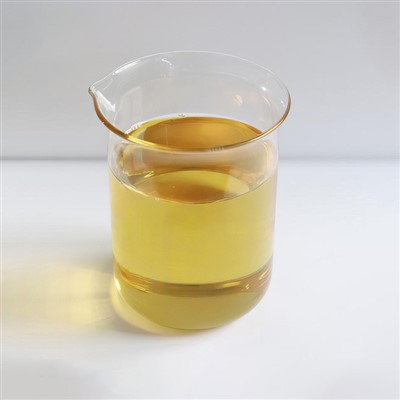
Understanding Fixing Agents
Fixing agents are substances used to enhance the fastness of dyes or pigments on materials. They work by forming a chemical bond with the dye molecules, preventing them from bleeding, fading, or washing out. This is particularly important in industries such as textile, leather, and paper, where colorfastness is a key quality factor.
There are different types of fixing agents, including cationic, anionic, and non – ionic ones. Cationic fixing agents are widely used in the textile industry because they can react with anionic dyes, forming insoluble complexes that improve colorfastness. Anionic fixing agents, on the other hand, are often used in combination with cationic dyes. Non – ionic fixing agents are more versatile and can be used in various systems without causing significant charge interactions.
Factors Affecting the Suitability of Fixing Agents on Different Materials
Chemical Composition of the Material
The chemical nature of the material is a fundamental factor. For example, in the textile industry, natural fibers like cotton, wool, and silk have different chemical compositions compared to synthetic fibers such as polyester, nylon, and acrylic. Cotton, a cellulose – based fiber, has hydroxyl groups on its surface. Cationic fixing agents can interact with the anionic dyes on cotton fibers through electrostatic attraction and chemical bonding, effectively improving colorfastness.
Wool, being a protein fiber, has a more complex structure with amino and carboxyl groups. The application of fixing agents on wool needs to be carefully managed because some fixing agents may damage the fiber structure or cause yellowing. Synthetic fibers like polyester have a relatively inert surface. Specialized fixing agents are required to ensure good adhesion and colorfastness. These fixing agents often contain functional groups that can interact with the polyester surface through physical or chemical mechanisms, such as dispersion and chemical grafting.
Surface Properties of the Material
The surface smoothness, porosity, and charge of the material also play important roles. A porous material can absorb more fixing agent, which may lead to better fixation. However, if the pores are too large, the fixing agent may penetrate too deeply, causing issues such as stiffness and reduced color brightness.
For example, in paper manufacturing, the porosity of the paper affects the performance of the fixing agent. A highly porous paper may require a higher dosage of fixing agent to achieve the desired colorfastness. The surface charge of the material can also influence the choice of fixing agent. If the material has a negative surface charge, a cationic fixing agent may be more suitable due to the electrostatic attraction between them.
Processing Conditions
The processing conditions during the application of the fixing agent are crucial. Temperature, pH, and treatment time can significantly affect the effectiveness of the fixing agent. For instance, in the textile dyeing process, the temperature of the fixing bath can influence the reactivity of the fixing agent with the dye. Higher temperatures may increase the reaction rate, but they can also cause damage to the material if not properly controlled.
The pH value of the treatment solution is another important factor. Some fixing agents work best under acidic conditions, while others are more effective in alkaline environments. For example, cationic fixing agents usually perform better in a slightly acidic pH range, as the acidic conditions can enhance the electrostatic interaction between the fixing agent and the anionic dye. Treatment time also matters. Insufficient treatment time may result in incomplete fixation, while over – treatment can lead to excessive consumption of the fixing agent and potential damage to the material.
Case Studies: Fixing Agents on Different Materials
Textiles
In the textile industry, we have seen a wide range of applications of fixing agents. For cotton fabrics dyed with reactive dyes, the use of cationic fixing agents can greatly improve the washing fastness. In a recent project, a textile manufacturer was facing issues with color bleeding and fading of their cotton T – shirts. After applying our cationic fixing agent under the recommended conditions (pH 5 – 6, temperature 40 – 50°C, and treatment time of 20 – 30 minutes), the washing fastness of the T – shirts improved from grade 2 – 3 to grade 4 – 5 on the standard fastness scale.
However, when dealing with silk fabrics, we need to be more cautious. Silk is a delicate fiber, and some fixing agents may damage its luster and softness. We developed a special non – ionic fixing agent for silk, which can enhance colorfastness without compromising the quality of the silk. In a trial with a silk scarve manufacturer, the application of our non – ionic fixing agent improved the dry and wet rubbing fastness of the scarves without any visible change in the fabric’s appearance and feel.
Leather
Leather is another material where fixing agents are commonly used. In the leather dyeing process, the colorfastness of the dyed leather is an important quality indicator. We have different types of fixing agents for different types of leather, such as vegetable – tanned leather and chrome – tanned leather.
For chrome – tanned leather, which is the most common type, our cationic fixing agent can react with the anionic dyes used in the dyeing process. In a case with a leather shoe manufacturer, the use of our fixing agent improved the colorfastness of the shoe uppers. The leather shoes passed the strict colorfastness tests for rubbing and perspiration, which were required by the international market.
Paper
In the paper industry, fixing agents are used to improve the color retention of printed or dyed paper. For example, in the production of colored packaging paper, our fixing agent can prevent the color from smudging and fading during handling and storage. A paper mill that produces colorful cardboard boxes reported that after using our fixing agent, the colorfastness of their boxes improved significantly, reducing the number of defective products and improving customer satisfaction.
Conclusion
In conclusion, fixing agents cannot be used on all materials without careful consideration. The chemical composition, surface properties, and processing conditions of the material all need to be taken into account when choosing the appropriate fixing agent. While our fixing agents have shown excellent performance in many applications, each material presents unique challenges and requirements.

As a supplier, we are committed to providing high – quality fixing agents and professional technical support. Our team of experts can help you select the most suitable fixing agent for your specific materials and production processes. We continuously research and develop new products to meet the evolving needs of different industries.
Fixing Agent If you are involved in industries such as textiles, leather, paper, or any other field where colorfastness is important, and you are looking for reliable fixing agents, we encourage you to contact us for a detailed discussion. We can work together to find the best solution for your fixing needs.
References
- Textile Chemical Processing Technology, 3rd Edition, by S. V. Ananthanarayanan
- Leather Technology Handbook, edited by R. Covington
- Paper and Paperboard Manufacture: Principles and Practice, by P. A. McCartney
Nanfeng Dasun Technology Co., Ltd.
As one of the leading fixing agent manufacturers and suppliers in China, we offer a wide range of products with superior quality for industrial. Please rest assured to buy bulk fixing agent made in China here from our factory. Contact us for more details.
Address: Nanfeng Industrial Park, Nanfeng County, Fuzhou City, Jiangxi Province, China
E-mail: Inquiry@honechem.com
WebSite: https://www.honechem.org/
