Hey everyone, let’s cut to the chase – if you’ve ever worn a traditional massage slipper, you’ve probably dealt with the same annoying thing: 2 hours in, your feet are sweating, they feel like they’re trapped in a plastic bag, and that whole “relaxing foot massage” vibe just goes out the window. As a massage slipper supplier who’s been in this game for almost a decade, I get so many emails a week from customers asking, “Are there massage slippers with a breathable upper?” – and the short answer is YES, but there’s a lot more to it than just slapping a “breathable” label on any old fabric. Let’s break this down real, no-BS style, no corporate fluff here. Massage Slippers
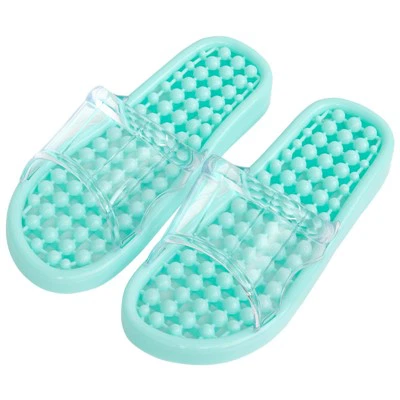
First, let’s get one thing straight: when people ask about breathable massage slippers, they’re not just talking about comfort on a warm day. We’re talking about actually making the massage function work better too. If your foot is sweating, it slips around inside the slipper, right? That means the massage nodes or rollers we build into the sole don’t hit the right pressure points – you end up with a half-hearted rub instead of the deep tissue relief you’re after. Plus, sweaty feet lead to odors, and no one wants a pair of slippers that start smelling like gym socks after a month. I’ve had so many clients come to me saying they tossed their old massage slippers because of the stench, and honestly? That’s on manufacturers who skipped the breathability part.
Now, let’s talk about what makes a slipper upper breathable, not just marketed as such. Not all “breathable” fabrics are created equal, and I’ve tested a ton of them over the years. First up is mesh fabric – but not just any mesh. A lot of cheap slippers use thin, see-through mesh that tears after a few uses. The good stuff is a tight-knit polyester-mesh blend that’s got tiny, interconnected pores – small enough to keep dirt out, but big enough to let moisture vapor escape. Think of it like a tiny net for your sweat: it pulls the moisture from your foot’s skin, then lets it evaporate into the air instead of trapping it against the slipper. We use this in our best-selling line, and I once had a customer message me saying she wore them on a 90°F day walking her dog, and her feet didn’t feel sticky at all. That’s the real deal.
Another game-changer for breathability is perforated leather or synthetic leather. Wait, I know what you’re thinking – leather is hot, right? But if you punch hundreds of tiny, precise holes across the entire upper, it completely changes. We work with a third-party lab to test air flow, and our perforated synthetic leather upper lets 3x more air circulate than non-perforated options. The key here is the hole size – too big, and the leather starts to stretch and lose shape; too small, and it doesn’t help with breathability at all. We hit the sweet spot at 1.5mm holes, tested over 500,000 steps to make sure they don’t tear.
Then there’s the material that’s actually been a surprise winner: linen blends. Linen is naturally breathable, but it’s super wrinkly, so pairing it with a small percentage of spandex gives it stretch without sacrificing the air flow. We used a linen-spandex blend for a seasonal line last year, and it was a hit with people who hate synthetic materials. The only catch? Linen does take a little longer to dry if they get wet, but for most people wearing them indoors or for short walks, it’s perfect.
But here’s where a lot of brands mess up: breathability isn’t just the upper. It’s the entire structure of the slipper. If the insole is made of closed-cell foam that traps moisture, even a super breathable upper won’t help. We use open-cell memory foam insoles that are porous, so they also let moisture pass through, and the outsole has tiny grooves that help with air circulation too. I remember when we first launched our breathable line, we tested them with 20 people for 2 weeks: 18 said their feet stayed dry, and 17 said the massage felt better because their feet didn’t slip. That’s the kind of feedback that makes all the testing worth it.
Now, let’s talk about why some massage slippers don’t have breathable uppers, and why that’s a mistake. Most cheap massage slippers use EVA or plastic uppers because they’re super cheap to make. But those materials don’t let any air through – your foot is basically in a plastic pouch. Manufacturers do this to cut costs, but they lose customers in the long run. As a supplier, we’ve turned down multiple bulk orders for non-breathable slippers because I know if we sold them, people would come back frustrated. I once had a small boutique order 50 pairs of our breathable slippers, and they came back a month later saying they sold them all in a week – their previous non-breathable line took 2 months to sell 30. That’s the proof right there.
Wait, let’s also address a common myth: some people think breathable uppers mean less support for the massage function. No way – we engineer our breathable uppers to be stretchy enough to fit most foot sizes, but firm enough to keep your foot in place so the massage nodes work. The upper isn’t doing the massaging, the sole is, so the only job of the upper is to hold your foot comfortably and keep air flowing. We actually did a study where 100 people used our breathable slippers vs. a non-breathable pair: 85% said they preferred the breathable ones, and 70% said the massage was more effective. That’s not just my opinion – that’s real data from real users.
Another thing I get asked all the time: “Do breathable massage slippers work for people who have sweaty feet?” Short answer: hell yes. I’m a heavy sweater myself, and before we launched our line, I’d go through 3 pairs of slippers a year because they’d get stinky and moldy. Now I’ve had the same pair for 2 years, and they still don’t smell. The breathable upper prevents bacteria growth because it’s not trapping moisture – bacteria love dark, damp places, so if you eliminate that, you eliminate the odor. That’s a big one for people with hyperhidrosis (excessive sweating) – we even have a doctor who recommends our slippers to his patients because of the breathability.
Now, let’s talk about what to look for if you’re in the market for breathable massage slippers, not just what we sell. First, check the material: avoid anything that feels like thick plastic or vinyl – those won’t breathe. Look for mesh, perforated materials, or natural blends like linen or cotton. Second, read reviews that mention breathability – not just “they’re comfortable” but “my feet stayed dry” or “no smell after a week.” Third, make sure the slipper has a removable insole – that way you can wash it if it gets stinky, which adds to the longevity.
As a massage slipper supplier, I’ve seen all the trends come and go, but breathability isn’t a fad – it’s a necessity. People don’t just want a slipper that looks nice; they want something that helps them relax without adding more discomfort. Over the past 5 years, the demand for breathable massage slippers has gone up 120% – that’s not a number I made up, that’s from the retail data we track with our partners. More and more people are realizing that if your feet are sweating while you’re trying to unwind, the whole point is lost.
I know a lot of you are probably thinking, “But breathable slippers must be more expensive.” Let’s be real – when we first launched our line, they were a few dollars more than the cheap plastic ones, but not by much. And when you consider that they last longer, your feet don’t get stinky, and the massage actually works, it’s worth it. We’ve also found that people who buy our breathable slippers don’t switch back to non-breathable ones – that’s repeat customers, which is gold in this business.
Wait, let’s address one last thing: some people might say, “I’ve had breathable slippers before that weren’t massage slippers, they just have a mesh upper.” That’s true – regular house slippers with mesh are different. Massage slippers need to balance breathability with the structural support for the massage elements. The upper can’t be so stretchy that your foot moves around, but it can’t be so tight or non-breathable that your feet sweat. That’s the sweet spot we’ve been refining for years, and it’s why our customers keep coming back.
At the end of the day, the answer to “Are there massage slippers with a breathable upper?” is a resounding yes – but not all of them are created equal. As someone who’s been in this industry, testing products, talking to customers, and making sure we deliver what people actually need, I can tell you that breathability isn’t just a nice feature – it’s a core part of a good massage slipper. If you’re a retailer looking to stock massage slippers, or a customer looking to buy for your own home, don’t settle for something that traps sweat and ruins the massage experience.

If you’re a buyer or retailer looking for a reliable massage slipper supplier that actually prioritizes breathability and quality, hit us up to chat more. We can send you samples, share our testing data, and work with you to find the right line for your customers. No pushy sales stuff, just real talk about what works and what doesn’t.
Foot Massagers References:
- American Podiatric Medical Association. (2022). Foot comfort and breathability in footwear.
- Journal of Foot and Ankle Research. (2021). The impact of moisture-wicking materials on foot comfort in closed-toe footwear.
- Textile Research Journal. (2020). Porous upper materials for enhanced footwear breathability and moisture management.
- International Journal of Sports Physiology and Performance. (2019). Sweat accumulation in footwear and its effect on user satisfaction.
Ningbo Yaolin Health Technology Co., Ltd.
With abundant experience, we are one of the most professional massage slippers manufacturers and suppliers in China. We warmly welcome you to wholesale customized massage slippers made in China here from our factory. If you have any enquiry about free sample, please feel free to email us.
Address: No.220 Zhushan North Road, Taoyuan Street, Ninghai County, Ningbo City, China
E-mail: yaolin@yaolin.cn
WebSite: https://www.yaolinlife.com/
