When I first started working in the plastic fire extinguisher cabinet supply business five years ago, I’ll admit I had a lot to learn. Back then, I met with a small restaurant owner who’d bought one of our lightweight, UV-resistant cabinets to replace their rusted metal one near the kitchen exit, only to call me a week later panicking—they’d put a CO₂ extinguisher inside, and now they were worried it wasn’t going to work when they needed it. That conversation started me down a path of figuring out exactly what types of fire extinguishers safely belong in our plastic cabinets, and it’s become one of the most important parts of what I help customers with every single day. Plastic Fire Extinguisher Cabinets
Plastic fire extinguisher cabinets aren’t a one-size-fits-all product, and neither are the extinguishers that go inside them. Too many people assume plastic is just “cheap metal” that can hold anything, but the materials, design, and construction of our cabinets—made from high-density polyethylene (HDPE) or fiberglass-reinforced plastic (FRP), specifically chosen for this application—have limits. The first step to getting this right is understanding both the cabinet’s capabilities and the extinguisher it’s holding, because when a fire breaks out, there’s no time to realize your cabinet can’t handle the equipment inside.
Let’s start with the most common type of extinguisher we store in plastic cabinets: water-based extinguishers. These are the red ones you see in office hallways, classrooms, and small retail spaces, rated for Class A fires—those involving ordinary combustibles like paper, wood, fabric, and plastic. Why do these work so well with our cabinets? For one thing, water extinguishers don’t generate extreme internal pressures under normal operating conditions. The pressure inside a standard 2.5-gallon water extinguisher hovers around 100 to 150 PSI when fully charged, which is well within the tensile strength of HDPE and FRP plastic. Unlike metal cabinets, our plastic models don’t corrode when they come into contact with minor spills from a leaking water extinguisher, either. Water is water, and plastic won’t react with it. That means if a water extinguisher develops a small leak over time (which happens, even with proper maintenance), the cabinet won’t degrade, and the extinguisher will stay protected until it’s needed. We’ve worked with hundreds of schools and small businesses that swear by this combination for spaces that don’t have heavy industrial use, and I always recommend water-based extinguishers as a safe, reliable pick for almost any light-to-medium traffic area.
Next up are foam extinguishers, which are also a solid fit for our plastic cabinets. Foam extinguishers are versatile—they handle Class A fires (same as water) and Class B fires involving flammable liquids like gasoline, diesel, and oil. Their pressure range is almost identical to water extinguishers, so there’s no risk of the cabinet cracking under pressure. The only thing to watch for here is the type of foam inside. Aqueous film-forming foam (AFFF), which is the most common type used in portable extinguishers, is water-based and won’t interact negatively with plastic. The only exception is a less common, older type of foam that uses harsh chemical solvents, but these are rarely used in portable extinguishers anymore, and they don’t come with the extinguisher models our suppliers offer. I’ve found that restaurants, auto repair shops, and small warehouses love foam extinguishers, and putting them in our plastic cabinets makes sense because the cabinets are lightweight enough to mount on walls above the reach of spills or foot traffic, but tough enough to hold the 5-pound or 10-pound foam units without bending or warping.
Now, dry chemical extinguishers are where a lot of people get confused, and it’s the area I get the most questions about from customers. There are two main types of dry chemical extinguishers, and only one is safe to store in our plastic cabinets. First, ordinary dry chemical extinguishers—often labeled as ABC extinguishers, since they handle Class A, B, and C fires (electrical fires, too, as long as they’re non-conductive when used). These extinguishers use monoammonium phosphate as their dry agent, and their internal pressure is also between 100 and 150 PSI for standard models. This is perfect for our plastic cabinets. HDPE and FRP are strong enough to hold the steel or aluminum shell of an ABC extinguisher, and since the agent is dry (not a liquid that can cause corrosion), there’s no risk of leaks eating through the cabinet over time. This is actually one of the most popular combinations we sell—office buildings, churches, and retail stores go for ABC extinguishers in plastic cabinets because they’re versatile, easy to mount, and don’t take up a lot of space.
The other type of dry chemical extinguisher, though, is a hard no-go for our plastic cabinets: dry powder extinguishers designed for Class D fires. Class D fires involve combustible metals like magnesium, lithium, titanium, and sodium, which are common in manufacturing plants, laboratories, and metalworking shops. The problem with these extinguishers isn’t just their pressure (which is similar to other dry extinguishers, by the way)—it’s their external components. Class D extinguishers are much heavier than standard ABC extinguishers. A typical 10-pound ABC extinguisher weighs about 15 pounds when charged, while a 10-pound Class D extinguisher can weigh 50 pounds or more, thanks to the specialized dry powder agent designed to smother metal fires. Our plastic cabinets are engineered to hold up to 30 pounds of extinguisher weight, max, for wall-mounted models—way more than enough for water, foam, and ABC units, but not nearly enough for the heavy Class D models. If you try to store a Class D extinguisher in our plastic cabinet, not only will it put too much strain on the mounting brackets (which could break over time, dropping the extinguisher when you need it), but the specialized dry powder can also be abrasive, and over years of minor vibrations, it can wear through the plastic cabinet’s interior. I always tell anyone working with combustible metals to stick to metal cabinets for their Class D extinguishers, because that’s what the equipment is designed for.
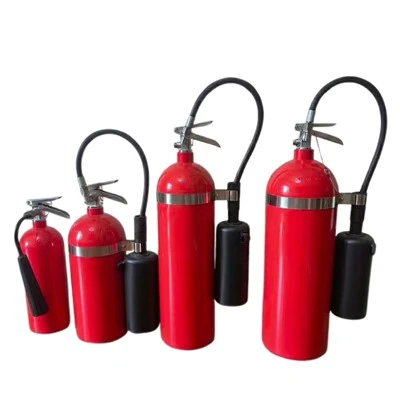
This brings me to the one type of extinguisher that’s a hard limit for all plastic fire extinguisher cabinets: CO₂ extinguishers. CO₂ extinguishers are the ones used for Class B (flammable liquids) and Class C (electrical) fires, often in server rooms, medical facilities, and kitchens with deep fryers. The reason these can’t go in plastic cabinets has nothing to do with their weight—they’re actually similar in weight to ABC extinguishers—it’s all about the pressure they hold. A fully charged CO₂ extinguisher operates at a pressure of 800 to 1200 PSI. That’s not a typo—800 to 1200 PSI. For context, a standard car tire is only about 30 PSI. Our HDPE and FRP plastic is strong, but it’s not built to hold that kind of pressure. If a CO₂ extinguisher’s seal failed (which can happen from age, impact, or even just temperature fluctuations, since CO₂ expands when it’s hot), the plastic cabinet would crack or shatter immediately, sending high-pressure CO₂ flying everywhere. Worse, if the extinguisher was under too much constant pressure for too long, it could develop a slow leak that would erode the plastic from the inside, weakening the cabinet over time until it fails when you need it most. I learned this the hard way from that restaurant owner I mentioned earlier—they’d put a 15-pound CO₂ extinguisher in a small plastic cabinet near their fryer, and when the pressure gauge started to drop after six months, they realized the cabinet’s back had started to warp from the cold CO₂ vapor. We replaced it with a steel cabinet at no charge, and that’s become a rule I stick to strictly: no CO₂ extinguishers in plastic cabinets, ever. It’s a safety issue, plain and simple.
Now, it’s not just about the type of extinguisher—it’s also about the mounting location and environment, which affects how well the cabinet and extinguisher work together. Our plastic cabinets are UV-stabilized, which means they can be stored outdoors or in areas with direct sunlight, unlike old metal cabinets that rust when left outside. But even then, if you’re mounting a cabinet with a water or ABC extinguisher near a furnace or in a space that gets over 120 degrees Fahrenheit, that can affect the extinguisher’s pressure. High temperatures make the pressure inside any extinguisher rise, so if you’re in a hot climate, you might want to go with a slightly sturdier FRP cabinet instead of a basic HDPE one, just to add an extra layer of protection. That’s the kind of advice we give every customer—we don’t just sell a cabinet and walk away. We ask about where it’s going, what type of extinguisher they’re using, and what kind of environment it will be in, because that’s how we make sure both the cabinet and the extinguisher work when they’re needed.
Another common question I get is whether a plastic cabinet can hold a larger extinguisher than usual. For example, someone might want to put a 20-pound ABC extinguisher in a small plastic cabinet. The answer is no, and it comes down to two things: weight and accessibility. Our standard wall-mounted plastic cabinets are rated for 30 pounds maximum, so a 20-pound extinguisher is too heavy and will put too much stress on the mounting screws and brackets, which can pull out of the wall over time. Also, plastic cabinets are designed to have the extinguisher fit snugly, so a 20-pound unit would be too long or too wide to fit properly, making it hard to pull out quickly in an emergency. Speed is everything when a fire starts—you don’t want to fumble with a cabinet that’s too tight because you forced a larger extinguisher in. That’s why we always recommend matching the cabinet size to the extinguisher size, not the other way around.
I think a lot of people overlook how important the cabinet is to the safety of the extinguisher. A good cabinet doesn’t just hide the fire equipment—it protects it from damage, temperature changes, impact, and theft. Plastic cabinets have an edge over metal ones in a lot of these areas: they don’t rust, they’re lightweight so they can be mounted on walls in spaces where metal would be too heavy, they’re less likely to dent if something hits them (like a rolling chair or a pallet in a warehouse), and they’re customizable with labels or branding for business logos. But all of that only works if you’re putting the right type of extinguisher inside.
Over the years, I’ve seen so many close calls because someone put the wrong extinguisher in the wrong cabinet. A small shop owner in Ohio told me last year that he’d seen a fire in a neighboring building that was in a plastic cabinet with a CO₂ extinguisher—when the fire got hot, the cabinet warped, and the extinguisher was hard to get to. He switched all his units after that, and now he’s a repeat customer. Another customer, a university facilities manager, told me they saved thousands of dollars by switching from metal to plastic cabinets for their hallway ABC extinguishers—they don’t rust in the damp Ohio climate, so they last twice as long, and the extinguishers inside are working perfectly after three years. That’s the sweet spot: pairing a good plastic cabinet with the right extinguisher for your needs.
At the end of the day, safety is non-negotiable. There’s no room for guesswork when it comes to fire equipment. If you’re not sure what type of extinguisher you can store in your plastic fire extinguisher cabinet, or if you need help picking the right cabinet for your space, I’m here to help. We work with small businesses, schools, warehouses, restaurants, and more, and we can walk you through every step—from choosing the right cabinet size to matching it to the right extinguisher type, so you can have peace of mind knowing your fire equipment is stored safely and will work when you need it.
If you have questions about plastic fire extinguisher cabinets for your space, or you’re ready to place an order, don’t hesitate to reach out and start a conversation. We’re here to help you find the right solution for your safety needs.
Fire Blanket References
Portable Fire Extinguishers: Selection, Installation, Maintenance, and Use. National Fire Protection Association.
Fire Extinguisher Cabinets: Material Specifications and Performance Standards. Underwriters Laboratories.
Combustible Liquid and Gas Fire Safety Manual. Occupational Safety and Health Administration.
High-Density Polyethylene Applications for Fire Safety Equipment. American Society of Testing and Materials.
Shaoxing Weimin Fire Fighting Equipment Co., Ltd.
Shaoxing Weimin Fire Fighting Equipment Co., Ltd. is one of the most professional plastic fire extinguisher cabinets manufacturers and suppliers in China, also supports customized service with low price. Welcome to buy discount plastic fire extinguisher cabinets in stock here and get quotation from our factory. 5 years warranty is available.
Address: CHINA
E-mail: info@weiminfire.com
WebSite: https://www.weiminfire.com/
