If you’ve ever paused to wonder why an axial flow fan costs what it does, you’re not alone. As a supplier who’s been shipping these fans to warehouses, manufacturing plants, and even residential HVAC teams for over 12 years, I’ve sat through hundreds of conversations with buyers starting with the same question: “What’s the average axial flow fan cost?” The answer isn’t a single number, and I’d be lying if I said it follows a simple formula. Today, I want to break down the real costs that go into these fans, the factors that swing prices, and what you’re actually paying for when you don’t just grab the cheapest option off the shelf. Axial Flow Fans
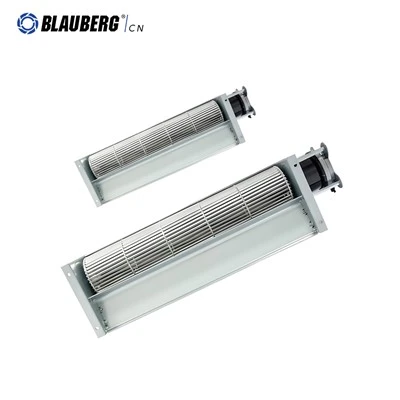
Let’s start with the basics. An axial flow fan works by moving air parallel to the axis of the fan blades—think of the big, boxy fans you see in loading docks, or the slimmer ones that cool server rooms. Unlike centrifugal fans that push air at a 90-degree angle, axial fans are built for high-volume, low-pressure airflow, which makes them perfect for applications where you need to move a lot of air fast, like cross-ventilation in manufacturing spaces or cooling power generation equipment. But that core function is where the similarities end, and the cost differences start.
The single biggest factor that impacts axial flow fan cost is size. I’ve seen 6-inch desk-mounted axial fans that sell for under $50, and 10-foot industrial axial fans for steel mills that cost upward of $15,000. That massive gap boils down to materials, power requirements, and structural engineering. A small consumer-grade fan uses thin plastic blades and a tiny, low-torque motor that runs on standard 120V household power. An industrial-grade 10-foot fan has blades made of heavy-gauge galvanized steel or even corrosion-resistant aluminum, a 100+ horsepower motor, and a reinforced steel housing that can withstand the vibration and heat of a nonstop manufacturing shift. I once quoted a food processing plant a 36-inch axial fan for their bakery’s exhaust system; the budget option they looked at was $800, and our custom-engineered version was $2,200. The difference? We tested our fan to run 24/7 without overheating, while the $800 unit was rated for only 8 hours a day and would have burned out in three months. Materials make all the difference here, and cutting corners on material grade is where a lot of cheap fan suppliers save money—at your expense.
Next, motor type and efficiency. This is another huge cost driver that most buyers overlook at first glance. Axial flow fan motors aren’t one-size-fits-all. There are three main types: shaded pole, PSC (Permanent Split Capacitor), and EC (Electronically Commutated) motors. Shaded pole motors are the cheapest—they’re what you find in those $25 window exhaust fans for small bathrooms. They’re inefficient, though, converting only about 25-35% of electrical energy into airflow, with the rest lost as heat. That means a shaded pole axial fan running on a 24/7 basis will cost you way more in electricity over its lifetime than a more efficient unit. PSC motors are a step up, converting 50-60% of energy into airflow, and they’re the workhorse for mid-grade industrial axial fans. EC motors are the most expensive upfront, but they’re the most efficient—up to 90% energy conversion, and they have built-in speed controls that let you adjust airflow to match your needs, not just run at full blast all the time. Last year, a customer in the data center space called me because their old axial fans were adding $1,800 a month to their electric bill. We swapped out their 12 PSC motor fans for 12 EC motor models, and their monthly electric bill dropped by $1,200. The extra $1,500 they paid upfront for the EC motors paid for itself in 5 months. That’s a tradeoff that’s hard to argue with, but it’s why the upfront cost can vary so much.
Then there’s the fan’s application rating, which directly affects cost. You can’t use a fan meant for a dry office building in a chemical plant, and vice versa. Fans have to be rated for the environment they’ll operate in: general purpose, corrosion-resistant, explosion-proof, or food-grade. A general-purpose axial fan for a dry warehouse is straightforward, costs less than a comparable specialized fan, and works fine. But a fan for a wastewater treatment plant that needs to move hydrogen sulfide-laden air has to have blades coated with a corrosion-resistant epoxy, a motor sealed against moisture, and all wiring rated for corrosive gasses. Last year, we had a customer in the petrochemical industry need 48-inch axial fans for their outdoor vent systems. They originally asked for a general-purpose unit, but when we walked them through the environment—high humidity, constant exposure to salt from coastal winds, and small amounts of volatile organic compounds—we quoted a corrosion-rated version that was 40% more expensive than the general unit. The customer almost pushed back, but 6 months later, they reached out to say the general unit had rusted through the housing, and they had to replace it. The corrosion-rated unit we sold them was still running perfectly, with no signs of wear. Application ratings aren’t just a nice-to-have—they’re a requirement for compliance in most regulated industries, and cutting corners here can lead to costly downtime or safety violations.
Customization is another factor that drives cost up, but it’s often necessary. Not every axial flow fan fits a standard space. Maybe you need a fan with a 15-degree angled housing to fit between two structural beams in a warehouse, or a variable speed controller to sync with your building’s HVAC system, or a special noise reduction liner for a rooftop fan near a residential area. Custom features add engineering time, specialized parts, and testing, so a customized axial fan will almost always cost more than an off-the-shelf unit. But I’ve seen many businesses save money long-term by getting a custom unit that fits their exact needs. For example, a grocery chain once wanted axial fans for their produce section coolers that weren’t so loud they would bother customers. Off-the-shelf fans for that application had a sound rating of 75 decibels—about as loud as a vacuum cleaner. We designed a custom version with a silencer liner and slower turning blades that brought the sound down to 52 decibels, quiet enough for a conversation in the same room. The custom fan cost 20% more than the off-the-shelf option, but the grocery chain didn’t have to invest in additional sound-dampening barriers, which would have cost them an extra $10,000 per location. That’s a tradeoff that’s well worth it for many customers.
Wait, but what about the “hidden” costs that come with choosing the cheapest axial flow fan? I’ve seen too many buyers focus solely on upfront cost only to end up paying more later. There’s downtime: a cheap, low-quality fan might burn out every 3-6 months, meaning you have to pay for emergency replacement, labor to take out the old one and install the new one, and the cost of whatever process was interrupted. I once had a customer in a automotive manufacturing plant tell me they replaced their $500 axial fans every 4 months, costing them $2,000 a year just for parts, plus 4 hours of downtime each replacement for the maintenance team. When they switched to our $1,800 industrial-grade axial fans, the units lasted 5 years, so their annual cost dropped to $360—way less than the $2,000 they were spending on cheap units. There’s also energy cost, as I mentioned earlier, which adds up over years. And there’s safety: in industrial settings, a faulty fan can lead to poor ventilation, which creates fire hazards, exposure to toxic fumes, or overheating of equipment that could lead to explosions. Those aren’t costs you want to deal with, but they’re very real consequences of choosing a fan that’s not built for the job.
Now, let’s talk about the actual price ranges to give you a sense. For small, consumer or light commercial axial flow fans (under 12 inches), you’ll typically see prices from $30 to $300. These are for bathroom exhausts, desktop cooling, or small shop ventilation. Mid-grade industrial axial fans (12 to 48 inches) usually range from $300 to $3,000, depending on motor type, material, and rating. These are for warehouse ventilation, HVAC systems, or general manufacturing use. Large, heavy-duty industrial or custom axial fans (48 inches and up) can range from $3,000 to $15,000 or more. These are for steel mills, power plants, chemical facilities, or large-scale cross-ventilation projects that require high airflow and strict environment ratings.
At the end of the day, the cost of an axial flow fan is a balance between upfront price and long-term value. I’ve seen customers come to us thinking a $500 fan is the best deal, only to realize that the $1,500 fan we recommended will save them thousands in downtime, energy, and replacement costs over 5 years. As a supplier, my job isn’t to sell you the most expensive fan—it’s to help you find the right fan for your needs, so you don’t overpay or end up with a unit that doesn’t work for your space.

If you’re ready to find an axial flow fan that fits your budget and your application, or if you have questions about the right features for your project, I’m here to help. Reach out to start a conversation about your needs, and we can walk through options that make sense for you.
Single Inlet Centrifugal Blowers References
- ASHRAE Handbook – HVAC Systems and Equipment, American Society of Heating, Refrigerating and Air-Conditioning Engineers, 2020.
- “Axial Flow Fan Efficiency Standards,” U.S. Department of Energy Office of Energy Efficiency & Renewable Energy, 2021.
- Fan Engineering Handbook, 8th Edition, Buffalo Fan Company, 2017.
- “Industrial Ventilation: A Guide to Basic Design,” American Conference of Governmental Industrial Hygienists, 2019.
Suzhou Blauberg Motoren Technology Co., Ltd.
Suzhou Blauberg Motoren Technology Co., Ltd. is one of the most professional axial flow fans manufacturers and suppliers in China, featured by quality products and good service. Please rest assured to buy bulk customized axial flow fans from our factory. Welcome to contact us for quotation.
Address: No. 8, Zhu Street, Industrial Park, Suzhou, JiangSu, China
E-mail: Andie@blauberg.cn
WebSite: https://www.blaubergmotors.com/
