Hey there, if you’re reading this, chances are you’re working with ASTM IPS Inch butt fusion fittings and running into annoying leaks that ruin your project timelines, waste materials, or even cost you clients. As a supplier who’s been in this game for over a decade, I’ve seen just about every mistake that leads to leaks with these fittings—some from our end (rare, but we own ’em), but way more from installation shortcuts that no one talks about. Let’s cut through the jargon and break down exactly how to keep those leaks at bay, no fancy lab degree required. ASTM IPS Inch Butt Fusion Fittings
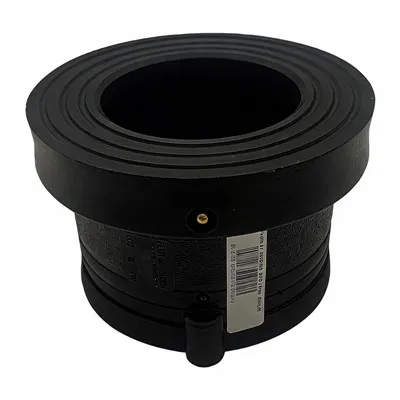
First, let’s get one thing straight: ASTM IPS inch fittings aren’t some random plastic parts. They’re built to strict ASTM D2239 standards for pressure-rated polyethylene (PE) pipe and fittings, right? But even the best fitting in the world will leak if you skip the prep work or cut corners on fusion. I can’t tell you how many times a customer has called me panicking because a joint they installed in their own shop failed pressure testing, and it always boils down to one of three key steps being messed up: surface prep, alignment, or fusion parameters.
Let’s start with the most common mistake I see: dirty or improperly prepped pipe ends. PE is pretty forgiving, but if there’s dirt, oil, dust, or even a thin layer of oxidation on the pipe or the fitting’s spigot, that fusion bond won’t be as strong as it needs to be. A lot of installers think “a quick wipe with a rag” is enough—nope. I’ve seen a joint leak because the installer had a greasy fingerprint on the pipe end; that’s not exaggerated. Here’s the thing: ASTM actually specifies that you should clean the entire fusion surface (at least 6 inches back from the end of the pipe and fitting) with a non-abrasive, alcohol-based cleaner—no mineral spirits, no WD-40, nothing oily. Then you need to scribe and cut the pipe square. Wait, square is non-negotiable. If your pipe end is cut at even a 1-degree angle, when you clamp it in the fusion machine, it won’t make full contact across the entire surface. That creates tiny gaps where pressure can seep through. I once had a customer who kept getting leaks on 12-inch IPS fittings, and turns out their pipe saw was dull—they were cutting ends at a 2-degree slant. Fixed the saw, no more leaks.
Next up: alignment. You can have perfectly prepped surfaces, but if your pipe and fitting are off-center when you clamp them, you’re asking for trouble. ASTM IPS inch fittings are made to match the outside diameter (OD) of IPS pipe, right? So your fusion machine’s clamps need to hold both parts coaxial—no offset. The standard here is that the gap between the pipe and fitting’s fusion surfaces should be less than 10% of the wall thickness. Wait, let’s make that simple: if you’re working with a 2-inch IPS pipe that has a 0.237-inch wall (common SDR 11, which is super popular for water lines), that gap can’t be more than 0.0237 inches. If you can slip a credit card between the two ends, that’s way too big. A lot of installers rush here and just “eye it” instead of using the machine’s alignment gauges—don’t do that. I’ve heard customers say, “The pipe looked centered!” but when we test the failed joints under pressure, the offset was enough to create a weak spot.
Now, the big one: fusion parameters. This is where most people mess up, especially if they’re using older fusion machines or going by “what worked last time” instead of looking up the exact specs for their specific ASTM IPS inch fitting. Wait, here’s a pro tip: every PE resin has a different melt temperature, and ASTM IPS fittings aren’t all made with the same resin. For most standard IPS PE fittings, the recommended fusion temperature is around 320-350°F (160-175°C). But here’s the mistake: if you heat the surfaces too hot, you get “burn back” or excessive melt flow, which reduces the wall thickness of the joint. If you heat them too cold, the resin doesn’t melt properly, so the bond is weak. Also, the soak time (how long you leave the heater plate on) and the fusion pressure (how hard you push the two parts together after removing the heater) are non-negotiable. Let’s use an example: for a 4-inch IPS SDR 11 fitting, soak time is about 30 seconds, and fusion pressure is around 250 PSI. If you go too short on soak time, the resin doesn’t flow enough to interlock, and if you go too long, you get too much melt being squeezed out (that excess is called “the bead,” but if it’s too big, that’s a red flag too). I once had a customer who had been using the same machine for 5 years, and the pressure gauge was off by 50 PSI—they were applying too little pressure, so the joint never bonded properly. They calibrated the gauge, and their leak rate dropped by 90%. Oh, and don’t reuse heater plates! A tiny scratch on the plate can leave a mark on the fusion surface that prevents uniform melting. If the heater has deep scratches, replace it—even a $50 plate will save you thousands in callbacks.
Wait, also: cooling time. This is another step everyone skips. After you finish fusion, you can’t unclamp and move the parts until they’re fully cooled. For 2-inch IPS fittings, that’s about 10 minutes; for 12-inch, it’s closer to 30. If you unclamp too early, the joint can shift, creating gaps, or even crack under pressure. I’ve seen a customer unclamp a 6-inch fitting after 5 minutes, and when they hooked up the water line, the joint split right at the bead. Don’t rush cooling—this is when the resin sets, and taking your time here is way cheaper than a emergency service call.
Now, let’s talk about something that’s specific to us as suppliers: sometimes, leaks aren’t the installer’s fault. Bad quality control on fittings is a thing, but that’s why we test every lot of ASTM IPS inch fittings before they leave our warehouse. Wait, but even so, make sure you’re ordering the right class of fitting. ASTM IPS fittings come in different pressure classes—100 PSI, 160 PSI, 200 PSI. If you use a 100 PSI fitting for a 160 PSI application, that’s a ticking time bomb. I always tell customers to double-check their project specs before ordering; if you’re not sure which class you need, just shoot us a message—we’ll help you pick the right one. Also, sometimes fittings have a slight taper on the spigot end to make installation easier, but that taper has to be within ASTM specs. If a fitting’s spigot is too small, you’ll have alignment issues; too big, you can’t push it on. That’s why we inspect every fitting for dimensional accuracy before shipping.
Wait, another common issue: not accounting for joint movement. If you’re installing ASTM IPS fittings in a line that’s going to have thermal expansion or contraction (like above-ground lines), you need to use expansion joints or a design that allows for movement, right? PE expands about 1 inch per 100 feet for every 10°F change in temperature. If you don’t account for that, the joint can pull apart and leak over time. I’ve seen a project where installers ran 500 feet of 8-inch IPS pipe in direct sunlight without any expansion loops, and by the end of the summer, the joints had separated. That’s a preventable mistake, no matter how good your fusion is.
Let’s also talk about testing. Even if you do every step right, you should test the joints before putting the line into service. For pressure lines, do a hydrostatic test at 1.5 times the working pressure, hold it for 1 hour, and make sure there’s no pressure drop. If you see a drop, don’t just assume it’s a small leak—dig that area up and fix it. I’ve had customers try to patch a small leak instead of redoing the joint, and it turned into a major failure a week later. Better to be safe than sorry.
Wait, let’s address some myths I hear all the time. Myth #1: “I can use a propane torch to heat the pipe instead of a fusion machine.” No way—propane is too hot, you’ll burn the PE, and you can’t control the temperature evenly. That’s a surefire way to get a leak. Myth #2: “A bigger bead means a better joint.” Nope, the bead is just excess melted resin. A good joint has a smooth, uniform bead that’s the same thickness all around. If the bead is lopsided or too big, you messed up either temperature or pressure. Myth #3: “All ASTM IPS inch fittings are the same.” Sorry, not true—some manufacturers cut corners on resin quality or dimensional specs, which is why we only sell fittings that meet the exact ASTM D2239 standard, no exceptions.
Now, let’s wrap this up with what actually works. Step by step, no shortcuts: 1) Clean all fusion surfaces with non-oily alcohol, scribe a square cut on the pipe end, make sure it’s free of burrs. 2) Align pipe and fitting perfectly, gap less than 10% wall thickness. 3) Calibrate your fusion machine’s temperature and pressure, use a good heater plate, follow the exact soak and fusion times for your fitting size. 4) Hold pressure and cool fully before unclamping. 5) Test every joint, and if you’re unsure about anything, ask—don’t guess.

If you’re working on a project and you’re tired of leaks that cost you time and money, we’ve got your back. We supply ASTM IPS inch fittings that are tested to strict standards, and our team can help you with any questions about fusion parameters, material selection, or installation best practices. No hoops to jump through, no confusing jargon—just straight answers from people who’ve been in the PE piping business for years. Reach out to us when you’re ready to order, and we’ll make sure you get the right parts and the support you need to get the job done right.
Electrofusion Fittings References: ASTM D2239, Standard Specification for Polyethylene (PE) Pipe and Fittings for Pressure Piping; ASTM F1216, Standard Practice for Butt Fusion Joining of Polyethylene (PE) Pipe and Fittings; Polyethylene Pipe Institute (PPI) TR-33, Handbook of Polyethylene Pipe.
Qingdao Polyfusion Machinery Co., Ltd.
As one of the most professional ASTM IPS inch butt fusion fittings manufacturers and suppliers in China, we have world-leading production equipment and strong manufacturing capabilities. Please feel free to buy bulk high quality ASTM IPS inch butt fusion fittings from our factory.
Address: Chengyang Industry Zone, Chengyang, Qingdao, Shandong, China
E-mail: export01@qdpolyfusion.com
WebSite: https://www.polyfusionfittings.com/
