If you’ve ever worked in a lab, you know that a Pasteur pipette is basically the workhorse for quick transfers—whether you’re moving 100 µL of buffer for a cell culture, loading samples for a quick assay, or transferring a tiny amount of reagent. But here’s the thing: if your pipette’s measurements are off, even by a little, your whole experiment can go sideways. That’s why calibrating your Pasteur pipettes regularly isn’t just a “nice to have” — it’s non-negotiable for accurate, reliable results. As someone who supplies Pasteur pipettes for labs large and small, I’ve seen firsthand how a lack of calibration leads to avoidable mistakes, so I’m breaking this down into simple, actionable steps that anyone can follow. Pasteur Pipette
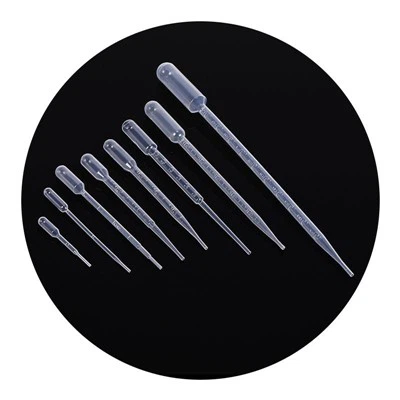
First, let’s get clear on what a Pasteur pipette is (and isn’t) for calibration. These aren’t the precision digital pipettes you use for exact microliter volumes—they’re glass or plastic pipettes with a rubber bulb on top, marked with rough volume graduations. But even so, their intended volumes (like 1 mL, 2 mL, or 5 mL) need to be consistent enough for your work. Plastic Pasteur pipettes, especially the disposable ones, are super common for quick tasks, but they’re also more prone to minor volume inconsistencies than glass ones. Glass ones can be reused, but that makes calibration even more important as they get worn from repeated washing and sterilization.
The tools you’ll need for calibration are pretty basic, no fancy lab equipment required. First off, a precision balance—this is key, because we’re measuring mass of water (which relates directly to volume, thanks to physics: 1 gram of pure water at 20°C is almost exactly 1 mL, with negligible error for most lab work). You’ll need a weight boat or a small, clean container to put on the balance, and a set of analytical weights to zero the balance if it doesn’t have an automatic tare. Then, of course, the Pasteur pipette you’re calibrating, some pure deionized or distilled water, and a rubber bulb (make sure it’s in good shape—no cracks, no leaks, because a bad bulb will mess up every reading). Oh, and a thermometer to check the water’s temperature, because that tiny temperature difference can throw your volume calculation off a little—more on that later.
Before you start, you’ve got to prep everything right. First, give the pipette a good wash and dry if it’s reusable; disposable ones come pre-sterilized, so just open the packaging carefully without touching the tip with your fingers (oil from your skin can leave residues that affect the water’s surface tension). Calibrate the balance first—set it to “zero” with the empty weight boat on it. Make sure the balance is on a flat, stable surface, away from drafts or vents, because even a little air movement can make the number flicker. Let the balance warm up for at least 10 minutes if it’s a newer model—cold balances give wonky readings. And check the water temperature: grab that thermometer, because if the water is 15°C, 1 gram = 1.002 mL; if it’s 25°C, it’s 0.997 mL. You’ll need that number to adjust your final volume calculation, so write it down somewhere.
Now, the actual calibration steps. This part is straightforward, but it’s easy to rush and make mistakes, so take it slow. First, squeeze the rubber bulb on your Pasteur pipette firmly before you insert the tip into the water. If you insert the tip first and then squeeze, you’ll push air into the water, which can make bubbles form and throw off the volume you draw up. Submerge the tip about ½ an inch into the water, then release the bulb slowly to let the water rise up the pipette. Don’t suck it all the way to the top or let it go past the first major graduation mark—we’re aiming for a set volume, say 1 mL, for this test. Once the water is at the mark, touch the tip gently to the side of the water container to draw off any excess water hanging off the end—this keeps you from having extra volume that doesn’t count.
Next, transfer that water into the pre-tared weight boat on the balance. Do this slowly, so you don’t drip any water on the outside of the weight boat or spill it. If you’re using a glass pipette, you’ll need to let the water drain fully—wait a few seconds after the last drop falls off the tip, because glass retains a tiny bit of water. Plastic pipettes might need a little less time, since plastic is smoother, but don’t cut it too short. Once all the water is in the weight boat, read the balance’s number. Let the balance settle for a few seconds—don’t write down a flickering number, wait until it’s stable.
Now, do this multiple times. I usually tell people to do 5 to 10 trials for one pipette. One reading is a fluke, but multiple readings will show you the average, which tells you if the pipette is consistent. If every trial is within 0.02 g of the next, that’s great—most lab work will accept that. If they’re all over the place, the bulb is probably leaking, or the graduations are off from the factory. And remember that temperature adjustment: if your balance reads 0.995 g, and your water is 25°C, that 0.995 g is 0.995 * (1 / 0.997) ≈ 0.998 mL, which is almost exactly the 1 mL you were aiming for. If it’s way off—like you get 0.95 g consistently for a 1 mL mark—your pipette’s graduations are wrong, so you’ll know it’s not accurate.
Wait, let’s talk about common mistakes here. A lot of people squeeze the bulb too hard, then release it too fast, which causes water to rise above the mark, and then they blow on it to bring it down. That’s a no-no—blowing can add extra air or moisture, and it’s not how the pipette was designed. Another mistake is not drying the weight boat between trials—extra water from previous tests will skew your readings. And don’t use tap water! Tap water has minerals and other impurities that will stick to the pipette and the weight boat, so you’ll get inconsistent mass readings. Stick to deionized water, it’s cheap and easy to get.
Also, when should you calibrate? Don’t just do this once and forget it. If you use a pipette every day, calibrate it every 3 months. If it’s disposable, you still might want to check a random box of pipettes every so often—sometimes factory runs have small errors. Reusable glass pipettes should be calibrated right after you sterilize them, because autoclaving can warp the glass slightly, throwing off the graduations. And if a pipette is dropped, even a tiny drop on the floor, that can bend the tip or warp the glass, so calibrate it right after an accident.
As a Pasteur pipette supplier, I know that a lot of labs don’t prioritize calibration because they think these are “rough” tools. But even for quick tasks, like transferring media or collecting samples, a 0.1 mL difference can mess up a cell culture experiment or a colorimetric assay. That’s why we make sure all our Pasteur pipettes (both glass and disposable plastic) are calibrated during manufacturing to within ±0.02 mL for their marked volumes, so you start with a reliable product. But even the best pipettes can drift over time, so regular calibration keeps your work accurate.
If you find that your pipette is consistently off and you can’t fix it (like if the graduations are worn off the glass, or the plastic is discolored from repeated use), it might be time to replace it. We’ve got a range of Pasteur pipettes for every lab need—disposable plastic ones for routine transfers, borosilicate glass ones for high-heat or sterile work, and even graduated ones for when you need a bit more precision than a plain pipette. If you’re not sure which one is right for your work, or you want to bulk order and make sure you’re getting tools that’ll stand up to regular use, just reach out to us. We’re here to answer questions, help you pick the right product, and make sure your lab has the tools to do accurate work.
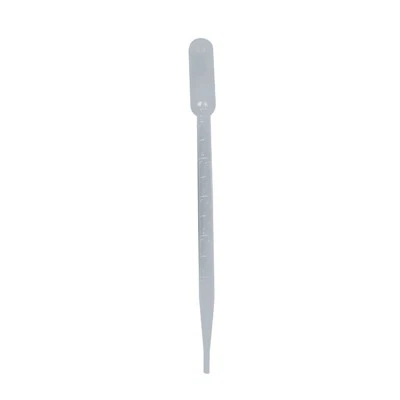
Before I wrap this up, let me leave you with a quick recap to make sure you don’t forget the steps: zero your balance with a clean weight boat, prep a good bulb and pure water, squeeze the bulb before inserting into water, draw water to the right mark, drain fully into the weight boat, weigh, and repeat 5-10 times. Check the temperature, adjust your calculation, and if readings are consistent, your pipette is good to go. If not, it’s time for a replacement. And don’t skip the calibration—one bad pipette can ruin weeks of experiments, which is way more expensive than taking 10 minutes to check your tools.
Plastic Dropper References
- American Society for Testing and Materials. Standard Practice for Calibration of Laboratory Glass Volumetric Ware. ASTM International, 2019.
- Hewlett-Packard Company. Balance Calibration Guidelines for Laboratory Analytical Balances. HP Scientific Equipment Manuals, 2021.
- Lab Safety Institute. Calibration Practices for Basic Pipettes in Research Laboratories. LSI Publications, 2020.
Taizhou Yukang Medical Devices Co., Ltd.
As one of the leading pasteur pipette manufacturers and suppliers in China, we warmly welcome you to buy customized pasteur pipette at competitive price from our factory. If you have any enquiry about quotation, please feel free to email us.
Address: Heheng Village, Shengao Town, Jiangyan District, Taizhou City
E-mail: taizhouyukang@163.com
WebSite: https://www.tzykylqx.com/
