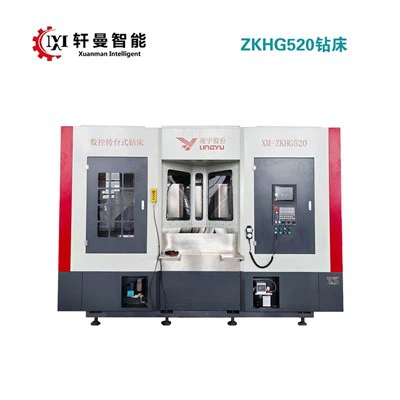
The spindle taper of a vertical machining center is a critical aspect that significantly impacts the performance, precision, and versatility of the machine. As a supplier of vertical machining centers, I’ve witnessed firsthand how understanding the spindle taper is crucial for both our customers and the overall machining process. Vertical Machining Center
Understanding the Basics of Spindle Taper
The spindle taper is the interface between the spindle of the vertical machining center and the tool holder. It serves as the connection point that allows the tool to be securely mounted and accurately positioned within the machine. This connection is essential for maintaining the stability and precision required for high – quality machining operations.
There are several types of spindle tapers commonly used in vertical machining centers. One of the most well – known is the ISO (International Organization for Standardization) taper. ISO tapers come in different sizes, such as ISO 30, ISO 40, and ISO 50. The number indicates the size of the taper, with larger numbers corresponding to larger tapers. For example, an ISO 50 taper is larger and can handle more substantial cutting forces compared to an ISO 30 taper.
Another popular type is the BT (Big – Plus) taper. The BT taper is similar to the ISO taper but has some unique features. It has a dual contact system, which means that in addition to the taper contact, there is also a face contact between the tool holder and the spindle. This dual contact provides better rigidity and accuracy, especially during high – speed machining operations.
Importance of Spindle Taper in Machining
The choice of spindle taper has a direct impact on the machining performance. A proper spindle taper ensures a secure connection between the tool and the spindle, reducing the risk of tool vibration and deflection. This is particularly important when performing high – precision machining tasks, such as milling complex contours or drilling small holes.
For instance, in aerospace manufacturing, where components often require extremely high precision, the right spindle taper can make a significant difference. A well – chosen taper can help achieve tight tolerances and smooth surface finishes, which are essential for the functionality and safety of aerospace parts.
The spindle taper also affects the tool change process. A reliable taper design allows for quick and easy tool changes, reducing downtime between operations. This is crucial in a production environment where maximizing productivity is a top priority.
Factors to Consider When Choosing a Spindle Taper
When selecting a spindle taper for a vertical machining center, several factors need to be taken into account.
Machining Requirements
The type of machining operations you plan to perform plays a significant role in determining the appropriate spindle taper. If you are mainly doing light – duty machining, such as small – scale prototyping or engraving, a smaller taper like ISO 30 may be sufficient. On the other hand, if you are involved in heavy – duty machining, such as roughing large workpieces or cutting hard materials, a larger taper like ISO 50 or BT 50 would be more suitable.
Tool Compatibility
It’s important to ensure that the spindle taper is compatible with the tool holders you plan to use. Different tool holders are designed for specific tapers, and using an incompatible combination can lead to poor performance and potential damage to the tool and the spindle.
Cost
The cost of the spindle taper and associated tool holders is also a consideration. Larger tapers and more advanced designs, such as the BT taper, may be more expensive. However, the investment can be justified if it results in improved performance and productivity in the long run.
Our Offerings as a Vertical Machining Center Supplier
As a supplier of vertical machining centers, we understand the importance of providing the right spindle taper options to our customers. We offer a range of vertical machining centers with different spindle tapers to meet the diverse needs of our clients.
Our machines are equipped with high – quality spindle tapers that are designed for optimal performance and reliability. Whether you need a small – sized ISO 30 taper for precision machining or a larger BT 50 taper for heavy – duty applications, we have the right solution for you.
We also provide comprehensive support and guidance to our customers in choosing the appropriate spindle taper for their specific requirements. Our team of experts can help you understand the technical details and make an informed decision based on your machining needs, budget, and long – term goals.
Real – World Applications and Case Studies
Let’s take a look at some real – world applications where the choice of spindle taper has made a significant impact.
In the automotive industry, a manufacturer was facing challenges with tool vibration and poor surface finishes when machining engine components. After switching to a vertical machining center with a BT 40 taper, they noticed a significant improvement in the quality of the machined parts. The dual – contact design of the BT taper provided better rigidity, reducing tool deflection and resulting in smoother surface finishes. This not only improved the overall quality of the products but also increased the productivity of the machining process.
In the mold – making industry, a company was using an ISO 30 taper for their small – scale mold production. However, as they started taking on larger and more complex mold projects, they found that the ISO 30 taper was not able to handle the increased cutting forces. By upgrading to an ISO 50 taper, they were able to perform heavy – duty machining operations with ease, improving the accuracy and efficiency of their mold – making process.
Future Trends in Spindle Taper Technology
The field of spindle taper technology is constantly evolving. One of the emerging trends is the development of more advanced taper designs that offer even better performance and accuracy. For example, some manufacturers are exploring the use of hybrid tapers that combine the advantages of different taper types.
Another trend is the integration of smart technologies into spindle tapers. This includes features such as real – time monitoring of tool performance, which can help detect potential issues early and prevent costly downtime.
Conclusion
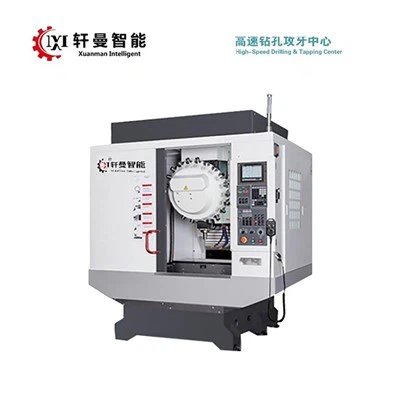
In conclusion, the spindle taper of a vertical machining center is a crucial component that has a profound impact on the machining process. As a supplier, we are committed to providing our customers with high – quality vertical machining centers equipped with the right spindle tapers. Whether you are a small – scale workshop or a large – scale manufacturing facility, understanding the importance of spindle taper and choosing the right one for your needs is essential for achieving optimal machining results.
Five-axis Machining Center If you are interested in learning more about our vertical machining centers and the spindle taper options we offer, or if you have any questions regarding your specific machining requirements, we encourage you to reach out to us. Our team of experts is ready to assist you in making the best decision for your business.
References
- "Machining Technology: An Introduction" by Robert L. Norton
- "Manufacturing Engineering and Technology" by Serope Kalpakjian and Steven R. Schmid
- Industry white papers on spindle taper technology from leading machining center manufacturers.
Jiangsu Xuanman Intelligent Equipment Co., Ltd.
We’re well-known as one of the leading vertical machining center manufacturers in China, featured by quality products and low price. Please rest assured to buy discount vertical machining center made in China here from our factory. We also accept customized orders.
Address: No. 1-1, Weier Road, Jieji Equipment Manufacturing Industrial Park, Sihong County, Suqian City, Jiangsu Province, China
E-mail: jsxmzn@163.com
WebSite: https://www.xm-cnc.com/
