If you’ve ever worked with aluminum die castings—whether sourcing components for automotive parts, consumer electronics, or industrial machinery—you know that porosity isn’t just a minor quality hiccup; it can be the difference between a part that holds up under pressure and one that fails prematurely. Early in my career as an aluminum die casting supplier, I thought porosity was just something that happened when the mold wasn’t filled right. I’ve since learned it’s a web of interconnected, often subtle factors, many of which we control daily in our shop to deliver consistent, high-quality castings for our clients. Over the last 12 years, I’ve tracked these factors through hundreds of production runs, adjusted our processes, and even had to fix a client’s batch that failed inspection because we overlooked a tiny detail—all to make sure we get it right every time. Today, I want to break down the key factors that influence porosity rates in aluminum die castings, from the metal itself to the equipment we use, and how we navigate them at our shop. Aluminum Die Castings

First, let’s start with the raw material, because bad aluminum at the start sets you up for porosity before you even fire up the press. I always tell new team members that not all aluminum alloys are created equal when it comes to porosity. Take the common A380 alloy, used for everything from laptop frames to engine components—its silicon content makes it strong, but it also has a higher affinity for hydrogen than alloys like A413. Hydrogen is a huge culprit here; when molten aluminum melts, it easily absorbs hydrogen from the atmosphere, moisture in the scrap metal, or even the oil on old aluminum parts we recycle. When that metal solidifies, hydrogen can’t escape, so it forms tiny, gas-filled bubbles—those are gas porosity, the most common type we see. A few years back, we had a batch of A380 parts for a power tool manufacturer that had 12% porosity in x-ray inspection, way over our 1% target. Turns out, the scrap metal supplier had sent us old aluminum castings that had been sitting outside in the rain for weeks—moisture had seeped into every crack, and when we melted it, all that water turned to hydrogen. Now, we pre-dry all scrap metal for 24 hours at 200°F before melting, and we use a degassing agent (chlorine tablets mixed with nitrogen) to pull excess hydrogen out of the molten metal. It added a step, but our porosity rates dropped to under 2% on that alloy.
Then there’s the pressure during the die casting process, and I can’t stress how critical this is. Die casting works by injecting molten aluminum into a steel die at extremely high speed, under pressure that can be 10,000 psi or more. If you don’t have enough pressure, the metal doesn’t fully fill the die cavity, and air gets trapped—this is called entrained air porosity, or mechanical porosity. Early on, we had a new operator adjust the injection pressure to save on wear on the die (he thought less pressure meant less stress on the tool) for a batch of automotive brake caliper parts. The result? 18% porosity, and 30% of the parts failed pressure testing, leaking brake fluid. We ended up having to scrap the whole batch, a $12,000 loss that taught me pressure isn’t something to cut corners on. But here’s the flip side: too much pressure can also cause porosity if you inject the metal too fast, pushing air into the die before it has a chance to escape. The sweet spot depends on the part geometry—small, intricate parts like phone frames need higher injection speed than large, thick parts like engine housings. At our shop, we test every new die for pressure and speed with a dummy run before full production, and we adjust based on part thickness: thicker areas need slower injection to let air out, while thin areas need speed to fill without solidifying early.
Next, die design and venting—this is one of the most overlooked factors, and it’s where I’ve seen even experienced suppliers go wrong. Vents are tiny gaps in the die that let trapped air and excess molten metal escape as the die fills. If vents are too small or placed in the wrong spot, air gets stuck, forming porosity right where you don’t want it—like in a part’s load-bearing edge. Last year, we got a request from a medical device client for a custom aluminum housing that needed zero porosity because it would be holding sensitive electronics. Our die designer originally placed vents only at the top of the housing, but after a test run, we found porosity in the bottom corners, where air was getting trapped. We added two additional vents along the bottom edge, spaced 2 mm apart, and the porosity rate dropped to less than 0.5% on that batch. The key with venting is that they need to be the right size: for aluminum, vents are usually 0.02 mm to 0.05 mm thick—too thin, and they clog with metal; too thick, and you get excess flash that needs machining. Also, die surface finish matters: rough die surfaces can catch air as the metal flows, creating small turbulence that traps air, so we polish our die cavities to a 0.8 Ra (roughness average) finish for most production runs.
Temperature control is another big one, and it’s not just the metal’s temperature—both the molten aluminum and the die surface need to be precise. If the molten metal is too cold, it solidifies before it fully fills the die cavity, leaving gaps and trapping air; if it’s too hot, it absorbs more hydrogen, as we saw with the rain-soaked scrap. We keep our A380 melts at 1,150°F, plus or minus 10°F—even a 20°F shift can cause a 3% jump in porosity, per our process logs. The die temperature is equally important: if the die is too cold, the metal cools too fast, leading to surface porosity; too hot, and the metal warps, creating gaps between the die halves that trap air. For our brake caliper dies, we maintain die temperature at 450°F, using heated oil lines that run through the die blocks. We track temperature every 15 minutes with digital sensors, and if it drifts more than 20°F, we pause production to adjust—no exceptions. That consistency has cut our porosity from a process variable to something we can predict within 0.5% per run.
Then there’s mold filling technique, which is about how the molten aluminum flows into the die. When metal flows unevenly—like gushing into one side of the die instead of spreading smoothly—it creates eddies that trap air. This is called laminar flow, and it’s something we spend hours adjusting with the gating system, which is the channel that feeds metal into the die. For a complex part like a camera housing, we use a four-point gating system, instead of a single entry, to spread the metal evenly. Last quarter, we switched a customer’s camera housing from a single gate to a multi-gate design, and their porosity rate went from 5% to 1%, which let them eliminate a secondary machining step they were doing to fix porous areas, saving them $20,000 a year. We also use a vacuum system for parts that demand extremely low porosity—we pull a partial vacuum on the die before injecting metal, removing almost all air from the cavity. That’s an extra step that adds 10 seconds to each cycle, but it’s worth it for aerospace clients who need parts with zero porosity, because even a 0.1 mm bubble can cause a component to fail under flight stress.
I should also mention post-processing factors, because porosity doesn’t always show up right after casting. Some porosity is microscopic, so it doesn’t show up in visual inspection, but it can expand when the part is machined or finished. For example, if you machine a part that has sub-surface porosity, the tooling can expose those bubbles, making the part rejectable. We always do a preliminary x-ray on 10% of each batch right after casting, and if we see any signs of porosity, we adjust our process before full production runs. We also avoid over-machining parts, because removing too much material can open up hidden porosity, so we work closely with our clients’ engineering teams to design parts with enough wall thickness to account for any minor porosity that might be present in the casting.
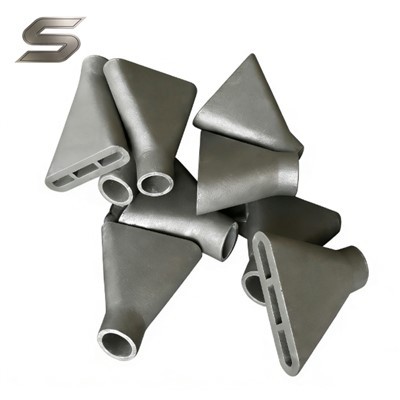
After 12 years in this business, I’ve learned that porosity isn’t a random flaw—it’s a result of small, controllable choices at every step of the process. We don’t cut corners on raw material drying, we calibrate pressure and temperature down to the degree, we rework die designs when a client has a unique part, and we track every process variable to make sure we’re delivering parts that meet their needs. If you’re sourcing aluminum die castings, whether for automotive, medical, or industrial use, porosity is something you need to take seriously, and working with a supplier who understands these factors can save you time, money, and headaches down the line. If you have a project where consistent porosity rates matter, we’d be happy to discuss your part requirements, adjust our processes to fit, and deliver high-quality castings that hold up under pressure.
Brass Green Sand Castings References
- Campbell, J. (2015). Complete Casting Handbook: Metal Casting Processes, Metallurgy, Design and Design. Butterworth-Heinemann.
- Lin, C., & Chen, L. (2018). Effects of hydrogen content and die casting parameters on porosity formation in A380 aluminum alloys. Journal of Materials Processing Technology, 255, 456-464.
- Kou, S. (2003). Transport Phenomena in Materials Processing. John Wiley & Sons.
- American Foundry Society. (2020). Die Casting Quality Standards and Process Control Guidelines. AFS Press.
Hebei Shata Machinery Co., Ltd.
As one of the most experienced aluminum die castings manufacturers and suppliers in China, we have advanced foundry technique and professional production team. Welcome to buy high-grade aluminum die castings for sale here from our factory. All custom made products are with high quality and competitive price.
Address: No.11 Cangshun Rd., Shijiazhuang, Hebei, China
E-mail: Info@shatamachinery.com
WebSite: https://www.shatamachinery.com/
