When a HVAC system’s insulated air duct underperforms, it’s rarely about the insulation material itself—most of the time, it’s a combination of installation oversights, mismatched material specs, and routine maintenance that gets pushed to the side. As an insulated air duct supplier with 12 years on the job, I’ve walked through hundreds of residential and commercial projects where a duct that should hit 90% thermal efficiency was barely scraping 60%, and the fix wasn’t a complete replacement—it was small, intentional tweaks that anyone can implement. Insulated Air Duct
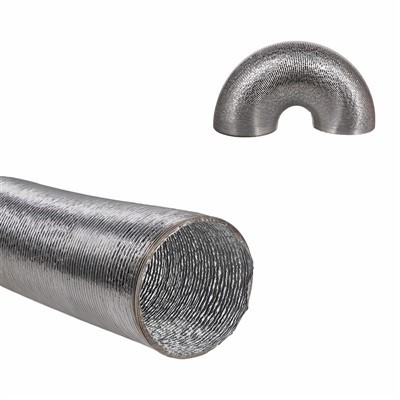
Let’s start with the most common mistake I see on new builds: wrong insulation thickness. I’ve lost count of the projects where contractors grab the thinnest fiberglass wrap to cut costs, but the math here is non-negotiable. For climates with extreme heating or cooling—think northern U.S. winters or desert Southwest summers—minimum insulation thickness for supply ducts (which carry conditioned air) shouldn’t be less than 2 inches, and for return ducts, 1.5 inches is a bare minimum. Wait, you might say: “What about mild climates?” Even there, skipping that extra half-inch costs homeowners 15-20% on their annual energy bills. Last year, I worked with a school district in Minnesota that swapped their 1-inch ducts for 3-inch closed-cell foam wraps (our best-selling product for commercial HVAC) and cut their monthly heating costs by $4,200. That’s not a random win—it’s a thickness choice backed by ASHRAE standards, which we design all our products around. The key here is matching insulation thickness to the duct’s location, not the cheapest option at the supply house.
Next, the biggest installation flaw that kills performance: gaps and seams. Insulated air ducts aren’t just about wrapping the outside—they’re about creating a continuous thermal barrier. I once supervised a retrofit on a 10-story office building where the old fiberglass wrap had ¼-inch gaps every 3 feet along the seams. By sealing those gaps with metal tape (not duct tape—duct tape fails in temperatures below 40°F or above 100°F) and adding a second layer of insulation over the seams, we boosted the system’s efficiency by 22% in three weeks. The mistake there was simple: contractors use flimsy adhesive strips that don’t hold, then skip taping because it’s “extra work.” Seams and gaps are the number one cause of thermal leakage, so never cut corners here. For metal ducts, use foil-faced insulation with a self-sealing adhesive, then reinforce every seam with aluminum foil tape—no exceptions. For flexible ducts, make sure the insulation jacket is stretched tight to avoid sagging, which creates gaps between the jacket and the duct surface. Sags are easy to miss, but they let conditioned air mix with unconditioned attic or crawl space air, wasting energy.
Then there’s duct sizing. It sounds trivial, but a duct that’s too narrow forces the HVAC system to work harder to push air, which not only lowers air flow (and makes rooms feel stuffy) but also creates condensation in uninsulated areas. Last year, a small restaurant owner came to us frustrated because his air conditioning unit was running 12 hours a day, even though the unit was only 5 years old. We measured his ducts and found they were 6 inches narrower than the ASHRAE recommended size for his 2,000 sq. ft. space. We worked with his installer to upsize the ducts and add our 2-inch foil-faced insulation, and his AC run time dropped to 8 hours a day. The key here: when retrofitting, don’t just add insulation to old ducts—check if the sizing is correct first. Oversized ducts, by the way, are a less common issue, but they can cause short cycling (the AC turns on and off too quickly), which also wastes energy. We always ask clients to provide their duct specs before recommending a product, because one size never fits all.
Condensation control is another area where people get tripped up, especially for ducts in crawl spaces, attics, or unconditioned basements. If insulation isn’t installed correctly, moisture can build up on the duct’s surface, seep into the insulation, and create mold or mildew—and that ruins insulation’s thermal properties. Water is a great conductor of heat, so even a small amount of moisture in insulation can cut its efficiency in half. The fix here is twofold: first, use insulation with a high moisture resistance rating (our closed-cell foam insulation has a perm rating of less than 1, meaning it blocks almost all moisture vapor), and second, make sure the duct is sloped slightly (1/4 inch per 10 feet) to drain any accidental condensation. I once had a residential client whose crawl space ducts developed mold because their old insulation was a loose-fill fiberglass that absorbed moisture. We swapped it for our closed-cell wrap and added a vapor barrier over the outside, and the mold was gone within a month.
Maintenance is the final piece of the puzzle, and it’s one that’s often overlooked. Most people change their HVAC air filters every 3 months, but they forget about the ducts. Over time, dust, dirt, and mold build up on the inside of ducts, which acts as an insulator—so the conditioned air has to work harder to get through the dirt layer. We recommend a duct inspection every 3-5 years, and a cleaning if there’s visible mold, rodent droppings, or a 20% drop in air flow. Also, check the insulation every year for damage: if the foil is torn, or the wrap is pulled away from the duct, it needs to be repaired or replaced. A simple $20 roll of aluminum tape can fix a tear in 5 minutes, saving you hundreds in energy costs.
Now, let’s talk about choosing the right insulation material for your project, because not all insulated air ducts are created equal. There are three main types: fiberglass, closed-cell foam, and flexible duct insulation. Fiberglass is the cheapest, but it’s porous (so it absorbs moisture) and can irritate lungs if the wrap is damaged. Closed-cell foam is more expensive, but it’s moisture-resistant, has a higher R-value per inch, and is more durable—so it’s perfect for commercial buildings or areas with extreme climates. Flexible duct insulation is good for tight spaces, but make sure it’s the foil-faced type, not the plain plastic, which doesn’t provide the same thermal barrier. I always tell clients: if you’re building a new home, go with closed-cell foam for supply ducts. If you’re retrofitting a small apartment, fiberglass with reinforced tape works well. If you’re in a harsh climate, spend the extra money on closed-cell foam—it pays for itself in energy savings within 2 years.
I’ve been in this industry long enough to see that the best way to optimize an insulated air duct isn’t about buying the most expensive product—it’s about making smart choices at every step. Whether you’re a homeowner looking to lower your energy bill, a contractor wanting to avoid callbacks, or a building manager trying to cut operational costs, small tweaks to thickness, seams, sizing, and maintenance can make a huge difference.

If you’re planning a new installation, retrofit, or just want to learn more about upgrading your insulated air ducts, don’t hesitate to reach out to discuss your specific project needs. We work with residential, commercial, and industrial clients across the region, and we’ll help you find the right solution for your budget and climate.
PVC Steel Wire Hose References
- American Society of Heating, Refrigerating and Air-Conditioning Engineers (ASHRAE). "Thermal Insulation for HVAC Ducts." ASHRAE Handbook—HVAC Applications, 2021.
- U.S. Department of Energy. "Energy Efficiency Tips for HVAC Systems." DOE Office of Energy Efficiency and Renewable Energy, 2022.
- National Air Duct Cleaners Association (NADCA). "Best Practices for Duct Insulation and Maintenance." NADCA Standards and Guidelines, 2023.
- Insulation Institute. "Choosing the Right Insulation for HVAC Ducts." Insulation Institute Research Report, 2021.
Dongyang Hstube Co., Ltd.
As one of the leading insulated air duct manufacturers and suppliers in China, we warmly welcome you to wholesale cheap insulated air duct for sale here from our factory. If you have any enquiry about free sample, please feel free to email us. Quality products and reasonable price are available.
Address: NO.5 CHENGDONG ECOLOGICAL INDUSTRIAL ZONE, DONGYANG, ZHEJIANG, CHINA.
E-mail: sales@hstube.com
WebSite: https://www.ductword.com/
