If you’ve ever hauled a half-full case of glass bottles across a warehouse floor or hefted a bulk box of pet food into your trunk, you’ve probably focused on the weight of what’s inside—not the thin, usually overlooked strip of kraft paper holding the lid together. But as a supplier dedicated to kraft paper for carton handles, I’ve spent the last decade watching that tiny component make or break a shipping process: too flimsy, and your box splits mid-transit; too wasteful, and you’re throwing away extra material that cuts into margins. Over the years, I’ve worked with everything from small e-commerce brands packing handmade candles to Fortune 500 companies shipping industrial machinery, and the question I get most often is: How do you optimize kraft paper for carton handles, without sacrificing strength, cost, or sustainability? Kraft Paper for Carton Handles
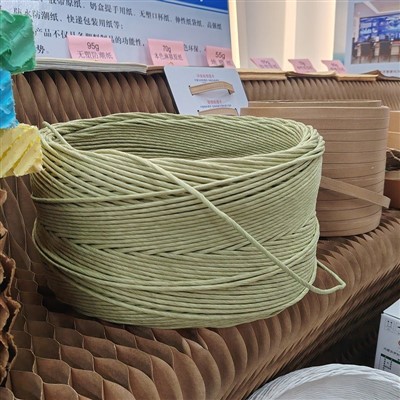
Let’s start with the basics that many teams skip because they assume all kraft paper is the same. It’s not. Kraft paper gets its name from the German word for “strong,” a nod to the sulfate pulping process that breaks down wood fibers without weakening them—unlike standard paper, which uses a different chemical process that shortens fibers. But even within the kraft category, there are huge differences in fiber length, ply count, and moisture content that directly impact how a handle performs. Early on, I had a client who switched to a cheaper kraft paper for their premium wine cartons, thinking they’d save money, only to end up with 12% more customer complaints about handles snapping before deliveries arrived. When we tested that “cheap” kraft against our standard handle stock, we found the cheaper version used shorter, recycled fibers that couldn’t hold up to repeated bending and temperature shifts during shipping. The lesson here isn’t to pick the most expensive paper—it’s to match the kraft grade to your specific use case.
For light-duty cartons (like those holding jewelry, cosmetics, or small electronics under 10 pounds), a single-ply, 40-lb bleached or natural kraft is often enough. Wait—40-lb? That sounds light, but it’s the basis weight per ream, not per sheet, and when processed into a handle, it’s strong enough for small loads. For medium-duty, like grocery store cereal boxes or snack packs (10–25 pounds), a double-ply kraft, usually 50-lb combined, is better. The double ply adds tensile strength (the ability to resist being pulled apart) without making the handle so thick it’s uncomfortable to grip. And for heavy-duty, like shipping industrial parts, bulk pet food, or retail apparel boxes over 25 pounds, we use triple-ply, 60–70-lb unbleached kraft, reinforced with a small strip of cross-direction fiber to prevent stretching. I can’t tell you how many times I’ve heard a client say, “We’re using 70-lb kraft for everything to be safe,” only to realize they’re spending 30% more per handle than they need to on their light-duty cartons. Matching basis weight to load is the first, and biggest, optimization step.
Next, how you process the kraft paper into a handle makes a huge difference. I’ve seen teams cut handles too narrow, too wide, or with weak fold points that snap mid-use. Let’s talk about dimensions first. The optimal handle width is between 18–22 millimeters, regardless of load. Why that range? Any narrower than 18mm, and the pressure of holding a heavy box concentrates on a tiny strip of your palm, leading to hand fatigue and a higher chance of the handle tearing. Any wider than 22mm, and you’re wasting extra paper that adds cost and takes up unnecessary space on the carton. I once worked with a craft beer brand that was using 25mm handles, and when we narrowed them to 20mm, they saw a 15% drop in material cost per handle and zero complaints about grip comfort.
Fold points are where most process optimizations happen. When you form a kraft paper handle, you fold the ends over to attach to the carton, right? Those folds should be a minimum of 10mm, and we add a slight crimp (a small indent) at the fold line when processing the paper to prevent fraying. Folds under 10mm mean the paper is stretched too thin at the attachment point, and frayed ends are more likely to snap when the box is lifted. Another process hack: using a perforation line down the center of the handle, not at the edges, to make it easier to pull open without tearing the paper. Early in my time as a supplier, I learned this the hard way—we shipped a batch of handles with perforations at the edges, and a client’s packing team was tearing half the handles while prepping boxes, adding hours of labor time. Moving the perforation to the center cut that labor waste by 80% for that client.
Then there’s the often-overlooked factor of moisture content. Kraft paper is hygroscopic, meaning it absorbs and releases moisture from the air. If your warehouse is in a dry climate, a handle that’s perfectly strong at 6% moisture content will weaken to 40% of its original tensile strength if it dries out to 2% during a week in a heated warehouse. If you’re shipping to a humid coastal region, the opposite is true: kraft paper can absorb excess moisture, leading to soft, flimsy handles that stretch under load. We optimize for moisture content at the mill, adjusting it to 5–7% for most standard use cases, but we also work with clients to adjust storage: keep kraft paper rolls in climate-controlled storage if you’re operating in extreme temperatures or humidity, and avoid leaving unprocessed rolls on concrete floors, which can absorb moisture from the ground and weaken the paper. I once had a client in Florida who stored his handle rolls in a loading dock over the summer, and he saw a 20% increase in handle failures until we worked with him to move storage indoors.
Sustainability is another big optimization angle, especially for brands that want to market eco-friendly packaging. Many teams assume that using virgin kraft paper is less sustainable than recycled, but that’s not always true for handles. For example, 100% post-consumer recycled kraft paper has shorter fibers than virgin, so it’s only suitable for light-duty handles. But there’s a middle ground: we offer “mix” kraft paper for medium-duty handles that’s 70% virgin long-fiber kraft for strength and 30% post-consumer recycled paper to reduce environmental impact. For heavy-duty handles, we use 100% virgin kraft because the fibers need to be long enough to support the load, and modern pulping mills use sustainable forestry practices that make this a better choice than recycled paper that can’t handle the weight. We also optimize the amount of paper per handle—no more cutting a 1-meter handle for a box that only needs an 80cm one. We work with clients to calculate exact handle length based on carton size, cutting waste by up to 10% for many brands.
Testing is the final piece of optimization, and it’s non-negotiable. You can follow all the guidelines, but every supply chain is different: a box shipped in a frozen truck will have different temperature exposure than one shipped via sea, a box held on a warehouse shelf for 6 weeks is different than one delivered in 2 days. We offer free sample testing for all our clients: we test handles for tensile strength (pulling them apart with a machine to measure how much weight they can hold before breaking), tear resistance, and grip comfort, and we also run real-world tests—lifting boxes with the handles on rough surfaces, in extreme temperatures, to make sure they perform as expected. Early on, I had a client that sold camping gear, which is stored in cold warehouses before being shipped in the winter. We tested our standard handle, and it failed at 15 pounds at 32 degrees Fahrenheit, so we adjusted the ply count and fiber blend to create a handle that held 35 pounds at that temperature, and that custom tweak made their product launch a success.
At the end of the day, optimizing kraft paper for carton handles isn’t about cutting corners or using the cheapest material—it’s about matching every component of the kraft paper to your specific needs, whether that’s load weight, climate, labor, or sustainability goals. As a supplier, I’ve seen too many brands overcomplicate this, either buying too much paper for light loads or using cheap paper that leads to customer complaints. The sweet spot is in balancing strength, cost, and practicality, and working with a partner who understands that kraft paper for handles isn’t just a small part of packaging—it’s the part that customers notice when they lift their order.
If you’re ready to cut handle costs, reduce failures, or test customized kraft paper handles for your cartons, I’m here to help. We can provide free samples, run performance tests for your specific supply chain, and work with you to optimize every aspect of your carton handles to meet your goals.
Colorful Wrappping Paper References
- Technical Association of the Pulp and Paper Industry (TAPPI). Kraft Paper Grades and Performance Specifications. Atlanta: TAPPI Press, 2021.
- Packaging Association of North America (PANA). Sustainable Packaging: Kraft Paper Optimization for Transit Applications. Chicago: PANA, 2022.
- International Journal of Packaging Technology and Science. The Impact of Moisture Content on Tensile Strength of Paper Handles. Volume 35, Issue 4, 2021.
- Small Business Administration (SBA). Packaging Optimization for E-Commerce Brands. Washington, DC: U.S. Small Business Administration, 2023.
Senzo New Material Group Co., Ltd.
As one of the most professional kraft paper for carton handles manufacturers and suppliers in China, we also support customized service. Please rest assured to buy high quality kraft paper for carton handles made in China here from our factory. For price consultation, contact us.
Address: Dongying Bonded Area, Shandong, P. R. China
E-mail: info@aonuochina.cn
WebSite: https://www.senzopaper.com/
