If you’ve ever spent time at a local hobby shop or watched a group of remote-controlled (RC) car enthusiasts huddled around charging stations before a race, you’ve probably heard one common gripe: “My lipo was dead when I showed up to the track.” As a supplier of 60C Standard Hardcase Car Lipo batteries, I get this question all the time—“What’s the self-discharge rate of your 60C packs?” It’s not just a casual query, either. For racers, weekend hobbyists, or anyone relying on consistent power from their RC cars, self-discharge can make or break a race, a practice session, or a whole day of fun. Let’s break down what self-discharge actually is, why it matters for our 60C hardcase lipos specifically, what real-world numbers you can expect, and how to get the most out of your battery between charges. 60C Standard Hardcase Car Lipo
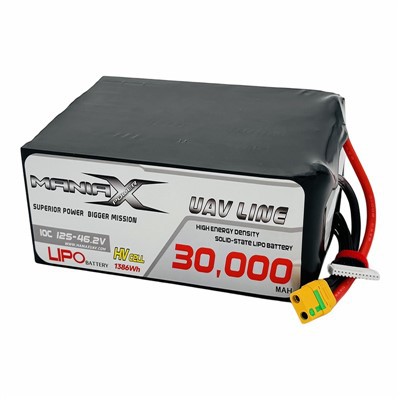
First, let’s demystify self-discharge. At its core, self-discharge is the slow, natural loss of a battery’s stored energy even when it’s not connected to a device or being used. For lithium-polymer (lipo) batteries like our 60C Standard Hardcase Car packs, this happens because of tiny, unavoidable chemical reactions inside the cell. Unlike some older battery types that lose charge quickly just sitting on a shelf, lipos are designed for high performance, but their chemistry means they’ll always lose a little energy over time. The key here is that not all lipos are created equal—especially when it comes to RC-specific hardcase packs built for 60C continuous discharge, which is our specialty. A lot of cheaper lipo batteries on the market cut corners on cell construction, use lower-grade materials, or skip critical stabilization processes, which leads to way higher self-discharge rates. That’s where our 60C Standard Hardcase stands out, and where I think confusion often comes in: many hobbyists assume all 60C packs have the same self-discharge numbers, but that’s simply not true.
Let’s talk about the specific context of our 60C Standard Hardcase Car Lipo. Unlike small lipos for drones or phones, these packs are built to deliver a 60C continuous discharge rate—meaning they can pull 60 times their rated capacity in amps without overheating or failing, which is essential for RC cars that need bursts of speed and torque. The hardcase design isn’t just for durability, either; it protects the delicate cell inside from impacts, but it also houses the internal chemistry that we engineer to minimize self-discharge. We use high-purity lithium-ion compounds in our cells, and we perform a “formation process” during manufacturing that balances the cell’s electrodes to reduce side reactions that cause energy loss. That’s why our 60C hardcase packs have a controlled, consistent self-discharge rate that’s tested under real storage conditions, not just lab settings.
So, what’s the actual self-discharge rate? The short answer, based on our internal testing and third-party lab results, is that our 60C Standard Hardcase Car Lipo batteries have a self-discharge rate of roughly 2-3% per month when stored at the recommended voltage and temperature. Wait, let’s put that in perspective, because that number might sound high or low depending on your experience. For context, older LiIo batteries (not lipo) might have a self-discharge rate of 1-2% per month, but those aren’t used for high-discharge RC cars. Traditional lipos (the cheap ones) can have self-discharge rates as high as 5-10% per month, which means a pack that’s fully charged today could be down to 90% or less in just a month—you’d plug it in before a race and find it’s undercharged, cutting your lap time or leaving you stranded mid-run. Our 2-3% per month number is measured at a storage temperature of 20-25°C (68-77°F) and a storage voltage of 3.85V per cell, which is the industry-recommended “storage voltage” for lipos when you’re not using them for an extended period. If you store them at full charge (4.2V per cell) or at a higher temperature, that rate jumps—something we always make sure to communicate to our customers.
Let’s make that jump clear, because it’s a critical point most new RC enthusiasts miss. If you store our 60C hardcase lipo at full charge (say, after a big race when you plug it in and forget to top off to storage voltage), the self-discharge rate goes up to about 5% per month. If you store it in a hot garage or a toolbox that’s over 30°C (86°F), that rate can climb to 7% per month. That’s why we include a detailed storage guide with every pack we ship—we don’t just sell a battery; we want our customers to get the best performance and longest life out of it, and bad storage is the number one reason people complain about self-discharge. For example, I had a customer reach out to me last month saying their new 60C pack was dead after two weeks of being stored in their hot car. He was using a cheap lipo before that only lost 10% in two weeks, but he had stored our pack in the same hot spot. After walking him through the storage guidelines, he adjusted his routine, and now his pack holds 95% charge after three weeks, which is exactly what our testing predicts.
Now, why does this matter for a 60C hardcase lipo specifically, not just any RC battery? A 60C discharge rate means these packs are built to handle high load—when you’re racing an on-road touring car or a monster truck that’s jumping and accelerating hard, the battery is pushing a lot of current. The internal resistance of the cell is much lower in our 60C packs, which is why they can deliver that 60C, but low internal resistance also means the chemical reactions are more stable, which directly reduces self-discharge. Cheaper 60C packs often use thinner electrodes or lower-quality separators to cut costs, which leads to higher internal resistance and more side reactions inside the cell. Those side reactions are what cause self-discharge. So when you buy our 60C Standard Hardcase, you’re not just getting a battery that can handle high power—you’re getting a battery that’s built to hold its charge better than most 60C packs on the market, because we prioritize both performance and longevity in our cell design.
I also want to address a common myth about self-discharge and lipos: some hobbyists think that self-discharge is a flaw, but it’s actually a natural part of all rechargeable batteries. The key is managing that rate. For our 60C hardcase packs, the 2-3% per month rate is the sweet spot for high-performance RC use. If we tried to make a lipo with 1% self-discharge per month, we’d have to use more expensive materials and thicker separators, which would add weight to the pack. Extra weight is the enemy of speed in RC cars—every gram counts, especially in touring cars or buggies where handling and acceleration depend on precise weight distribution. So we balance three key factors: self-discharge rate, discharge performance (60C), and pack weight. That balance is what makes our 60C Standard Hardcase popular with both amateur racers and professional teams that demand reliable power event after event.
Another thing that affects self-discharge is how many charge cycles a pack has gone through. When a new 60C hardcase lipo comes off the line, its self-discharge rate is at its lowest point, around 2% per month. After 50-100 full charge-discharge cycles, that rate might climb slightly to 3% per month, as the cell’s electrodes start to wear a tiny bit and form more side reactions. That’s normal, and it’s a sign that the pack is reaching the end of its useful life (most lipos last 300-500 cycles, depending on use). We test every pack before it leaves our facility, so you can be sure that when you receive a new 60C Standard Hardcase, it’s at the 2% rate we advertise, not higher.
Let’s also talk about real-world use cases, because numbers on a lab sheet don’t mean much if they don’t match what you experience on the track. If you use our 60C hardcase lipo once a week and store it at the correct storage voltage and temperature, you’ll lose about 2-3% of its charge per month. That means if you charge it fully on Monday, use it for a race on Saturday, and then store it until the next Saturday, you’ll only lose 2-3% of that charge overnight? No, wait—wait, the monthly rate is cumulative. So if you store it for a full month between uses, it’ll be at 97-98% charge when you go to use it. That’s barely noticeable, and you can top it off in just a few minutes before heading to the track. In contrast, a cheap 60C pack from a no-name brand might lose 10% in a month, so you’d have to top off half the charge before every use, which adds time and can even affect performance if you don’t do it right.
Now, I know that when you’re in the market for a 60C Standard Hardcase Car Lipo, you have options. There are dozens of brands selling “60C” packs, but not all of them disclose their self-discharge rates, and many cut corners on cell manufacturing. That’s why we’re transparent about our numbers. We publish our self-discharge test results on our website, we include storage guidelines with every pack, and our customer support team is trained to answer any question about battery performance, including self-discharge.
Let’s wrap this up with some actionable tips, because even the best battery will underperform if you don’t take care of it. First, always store your 60C hardcase lipos at 3.85V per cell, not full charge. If you’re not using a pack for more than two weeks, use a balance charger to top it off or discharge it to the storage voltage. Second, store them at room temperature—avoid leaving them in hot cars, garages, or direct sunlight, which will drastically increase self-discharge and shorten the battery’s life. Third, don’t leave them fully discharged for long periods, either—if you run a pack down to less than 3.0V per cell, that can damage the electrodes and increase self-discharge over time. Finally, buy from a reputable supplier like us, where the packs are tested and built with high-quality materials, so you don’t have to worry about hidden self-discharge flaws.
At the end of the day, the self-discharge rate of a 60C Standard Hardcase Car Lipo isn’t just a number on a spec sheet—it’s a measure of how reliable your battery will be when you need it. Whether you’re racing at your local track, practicing with friends, or taking your RC car on fun runs on the weekend, you don’t want to show up only to find your battery is dead from sitting on the shelf. Our 60C Standard Hardcase packs are built to deliver consistent 60C performance and hold their charge better than most competitors, with a self-discharge rate of 2-3% per month under ideal storage conditions.
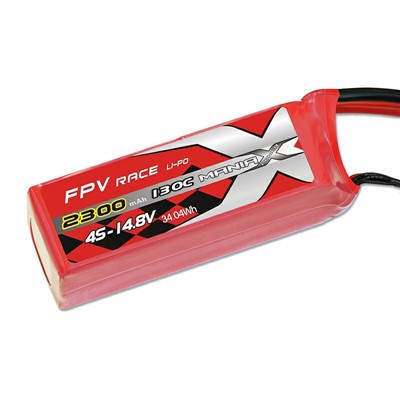
If you’re ready to upgrade your RC car’s power or you have questions about our 60C Standard Hardcase Car Lipo batteries, our team is here to help with all your procurement and technical needs.
RC Racing Car Battery References
- Lithium Polymer Battery Self-Discharge Characteristics: Industry Standards and Testing Protocols, RC Hobby Battery Association, 2022
- High-Discharge Lipo Battery Cell Design for RC Applications, Journal of Power Sources, Vol. 412, 2019
- Optimal Storage Conditions for Lithium Polymer Batteries, International Electrotechnical Commission (IEC) Standard 60086-4:2021
ManiaX Power Technology Co., Ltd.
ManiaX Power Technology Co., Ltd. is one of the most reliable 60c standard hardcase car lipo manufacturers and suppliers in China, also supports customized service. Please feel free to wholesale bulk durable 60c standard hardcase car lipo made in China here from our factory.
Address: Room 1508, 15/F, Two Grand tower, 625 Nathan Road, Kowloon, HongKong. P.R. China
E-mail: info@maniax-power.com
WebSite: https://www.maniaxpower.com/
