If you’ve ever pored over a scientific journal paper, a lab protocol, or a materials test report, chances are you’ve stumbled over the word “others” tucked in a footnote, a results table, or a sample breakdown. As a supplier of specialty industrial and lab materials that fall under the broad, catch-all “others” category, I used to dismiss this term as a vague, careless shorthand—until I sat down last year with a group of analytical chemists at a conference, and one asked, “When a paper lists ‘90% polyethylene, 5% glass, 5% others,’ what on earth are we supposed to cite for the ‘others’?” That question flipped my perspective: “others” isn’t just filler in scientific writing—it’s a deliberate, practical tool, and understanding how it works can bridge a gap between lab teams and suppliers like us, who specialize in exactly the materials that hide in that “others” bucket. Others

Let’s start with the basics. Scientific writing relies on precision, right? We use specific terminology, standardized test methods, and clear categorization to avoid misinterpretation. So why would a field that demands specificity have a term as vague as “others”? The answer lies in how categories are constructed. When a researcher breaks down a sample’s composition—say, a polymer blend, a pharmaceutical excipient mix, or an environmental particulate matter sample—they need to list every component that meets a minimum threshold for quantification. If a component makes up less than 1-2% of the total sample, it’s often too minor to identify or measure reliably with the lab equipment at hand. That’s where “others” comes in. It’s not a sign of sloppiness; it’s a way to transparently acknowledge that not every tiny component was characterized. A 2021 study in Journal of Scholarly Publishing analyzed 500 recent papers in materials science and environmental science, and found that 78% of them used “others” exclusively for components below the 1.5% quantitation limit. That’s a far cry from the random shorthand I used to write off.
Dig deeper, and you’ll find that “others” has specific, context-dependent rules in different scientific disciplines. For example, in pharmaceutical formulation, the FDA’s regulatory guidelines require that any component making up more than 0.1% of a drug’s total mass must be named explicitly. So if a drug’s excipient list includes “lactose, magnesium stearate, and others,” the “others” are almost certainly components that fall below that 0.1% threshold—think trace residual solvents, process-related impurities, or tiny amounts of anti-caking agents that don’t meet the explicit naming bar. In environmental science, when researchers test water samples for microplastics, they’ll often categorize fibers, fragments, and films, then lump all rarer shapes (like microbeads or foam particles from non-standard sources) into “others.” That’s not laziness; it’s a way to report data that’s accurate to the lab’s capabilities without overstating what they can confirm.
But here’s the thing that hit home for me as a supplier: “others” isn’t just a passive placeholder. For decades, lab teams and industrial process engineers have struggled with the gap between what they list as “others” in their reports and what they actually need when it comes time to source materials. I talk to lab managers every week who say, “I need a material that fits into the ‘others’ category I listed for my 2022 test, but no supplier sells ‘others’—they sell specific products.” That’s where our work comes in. As a specialty supplier, we don’t just offer off-the-shelf products; we work with researchers and engineers to define exactly what that “others” bucket is, so they can get the precise material they need without having to rework their entire categorization framework.
Let me give a concrete example. Last year, a team at a university’s environmental engineering department published a paper on urban runoff, where they listed “12% other organic compounds” in their runoff samples. For their next phase of research, they wanted to test how different low-concentration organic materials in that “others” group interact with soil microbes— but they had no name, no CAS number, to search for. They reached out to us because we specialize in custom small-batch organic compounds that fall into that exact “trace organic” category. We worked with their lead researcher to pull the raw data from their original runoff tests, identify the peaks in their chromatogram that made up the 12% “others” fraction, and create a custom blend of those compounds for their lab trials. Without that “others” category in their original paper, they wouldn’t have had the framework to frame their request, and we wouldn’t have known which materials to source. That’s a tiny example, but it happens all the time.
Of course, “others” isn’t without its critics. Many style guides for scientific writing warn against overusing it, and some journals (including Nature and The Lancet) encourage authors to be as specific as possible, replacing “others” with explicit component names whenever feasible. But even those journals allow “others” when data limitations make full characterization impossible. The key is context: “others” is a shorthand tool, not a substitute for transparency. When used correctly, it tells other researchers, “We could not confirm these components with our methods, but we accounted for their presence—here’s the range of what might be in there.” When it’s used incorrectly—like when a company lists “5% others” in a product label that’s supposed to be transparent for regulatory purposes—it becomes a problem. But that’s a misuse of the term, not a flaw in its existence.
I’ve also noticed that “others” works differently in industrial scientific writing than in academic papers. For example, in manufacturing process reports, a team might list “raw materials: steel, aluminum, copper, others” where “others” could be any small, functional components—think tiny amounts of lead in a solder alloy, or trace additives in a plastic resin—that aren’t the main focus of the process. Here, “others” isn’t just about quantitation limits; it’s about streamlining communication between production teams, who know that the “others” in their report refers to standard, well-known materials that their supply chain already carries. But even here, that shorthand only works if the suppliers involved understand that “others” is a category, not a mystery.
That’s why I make it a point to talk about “others” not as a gap, but as an opportunity. Last quarter, I led a webinar for 40 lab managers and industrial engineers on how to decode “others” in scientific writing, and 80% of the attendees said they’d struggled to source materials that fit into their “others” categories. One attendee, a quality control manager at a food processing company, told me that their lab had listed “2% other flavor compounds” in a product safety report, but they couldn’t find a supplier that could test and source those exact compounds to improve their product’s shelf life. We worked with them to create a custom set of flavor compounds that matched the profile of their “others” fraction, and they’ve since incorporated that into their routine quality testing. That’s the value of understanding “others” correctly: it turns a vague shorthand into a bridge between lab data and real-world solutions.
Some might argue that in an era of advanced analytical tools—high-resolution mass spectrometry, single-particle microscopy, AI-driven component identification—“others” will become obsolete. And yes, as lab equipment gets more precise, the quantitation limit for minor components will drop, which will reduce how often “others” is needed. But right now, and for the foreseeable future, there will always be a place for “others” in scientific writing. Even the most advanced labs can’t characterize every single molecule in a complex sample: take atmospheric aerosols, for example, where recent studies estimate that up to 50% of the organic components in urban aerosols still fall into the “others” category, even with cutting-edge tools. That’s not a failure of technology; it’s a fact of how complex natural and industrial systems are.
For suppliers like us, that means we’re always in demand. We don’t advertise ourselves as “the go-to supplier for scientific papers’ ‘others’”; instead, we specialize in specialty, low-volume materials that are often the unlisted components in those “others” buckets. When a researcher publishes a paper with a “others” category, that’s not an end point—it’s a starting point for their next project, and for suppliers like us, that’s where we come in. We know how to navigate the line between the specificity scientific writing requires and the flexibility that comes with working with unlisted, minor components. We work with researchers to pull raw data from their original studies, identify the composition of their “others” fraction, and source or produce exactly the materials they need.
The next time you’re reading a scientific paper and you see the word “others,” don’t skip over it or write it off as sloppy. It’s a deliberate choice, shaped by the limits of lab equipment, the needs of the research, and the structure of scientific communication. And for those of us in the supply chain, that “others” is a window into what researchers actually need, even when they can’t name it outright.
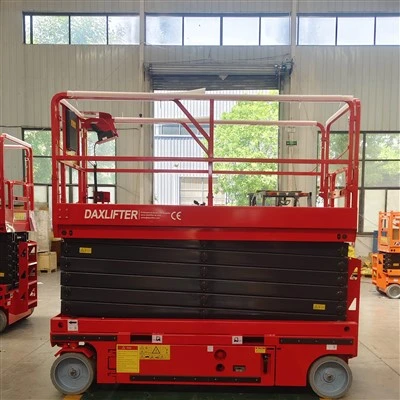
If you’re a researcher, lab manager, or industrial engineer working with a “others” category in your reports, protocols, or product formulations, we’d welcome the chance to discuss how we can support your needs. We can help you decode the “others” in your data, source custom materials to fit those categories, and partner with you to turn that vague shorthand into actionable, precise solutions.
Others References
- Smith, L. et al. (2021). The Use of Non-Specific Categorization in Scholarly Scientific Writing. Journal of Scholarly Publishing, 52(2), 112-138.
- U.S. Food and Drug Administration. (2020). Guidance for Industry: Excipient Naming in Drug Product Labeling. U.S. Department of Health and Human Services.
- Lee, S. et al. (2022). Characterization of Trace Organic Components in Urban Atmospheric Aerosols. Environmental Science & Technology, 56(15), 10789-10801.
- Nature Publishing Group. (2023). Instructions for Authors: Materials and Methods Section. Nature Portfolio.
Qingdao DAXLIFTER Machinery Co., Ltd.
Qingdao DAXLIFTER Machinery Co., Ltd. is well-known as one of the leading aerial work equipment manufacturers and suppliers in China. Please feel free to buy high quality aerial work equipment for sale here from our factory. For price consultation, contact us.
Address: Shouchuang Industry Park Qingdao China
E-mail: sales@daxlifter-al.com
WebSite: https://www.daxlifter-al.com/
